
4 min read

2026 UK Workplace Transport Training Changes: Essential Employer Guide

2026 UK Workplace Transport Training Changes: Essential Employer Guide
2026 Workplace Transport Training Changes Explained | Circle Academy
8:07

From 19 January 2026, the biggest changes to workplace transport training in recent years came into effect across the UK. Introduced by the Accrediting Bodies Association for Workplace Transport (ABA) with support from the Health and Safety Executive (HSE), the revised workplace transport groupings are designed to better reflect modern equipment, improve consistency across accredited training providers and strengthen operator competence. While many of the category changes may appear minor at first glance, they have significant implications for employers operating forklifts, reach trucks, order pickers, telehandlers and other material handling equipment.

If your business relies on workplace transport, understanding these changes is essential to maintaining compliance, reducing risk and ensuring operators are trained for the equipment they actually use.

View Workplace Transport Courses →

Why Have the Training Categories Changed?

Workplace transport remains one of the leading causes of serious injuries and fatalities in UK workplaces. Forklift trucks, telehandlers, tow tractors and similar vehicles operate in busy environments where pedestrians, vehicles and machinery often interact.

Over time, equipment has evolved, but many of the training categories had not kept pace.

The ABA review introduces clearer equipment classifications, removes outdated categories and better reflects how modern machines are used across warehouses, distribution centres, construction sites, ports and industrial facilities. The aim is to improve consistency between accredited training providers while helping employers ensure operators receive the correct training for the equipment they use.

What Has Changed?

The updated workplace transport groupings include several important revisions.

Reach Trucks

The previous D1 and D2 categories have now been merged into a single D1 category.

Although the category structure has been simplified, employers must still ensure operators are trained and assessed on the actual lifting height and machine configuration they will use in the workplace. Training records should clearly reflect the equipment used during assessment.

Low Level Order Pickers

Low Level Order Pickers have moved from the previous A2 category into a new dedicated E0 category. This recognises the growing use of these machines within logistics and warehousing and provides a clearer training pathway for operators.

Tow Tractors

The H3 category has been removed, simplifying the Tow Tractor classification while removing previous weight restrictions within the remaining categories.

Rough Terrain and Telehandlers

The J Group has been restructured to create clearer distinctions between rough terrain forklifts, telescopic handlers and articulated machines. For employers operating across construction, agriculture and infrastructure, this means reviewing operator competence against the revised categories rather than assuming existing certification automatically covers all equipment.

New Equipment Categories

Several new classifications have also been introduced, including:

  • Vertical Stock Pickers (SP1)

  • Pedestrian Multi-Directional Stacker Trucks (M4)

These additions reflect equipment that has become increasingly common across modern warehouses and industrial operations.

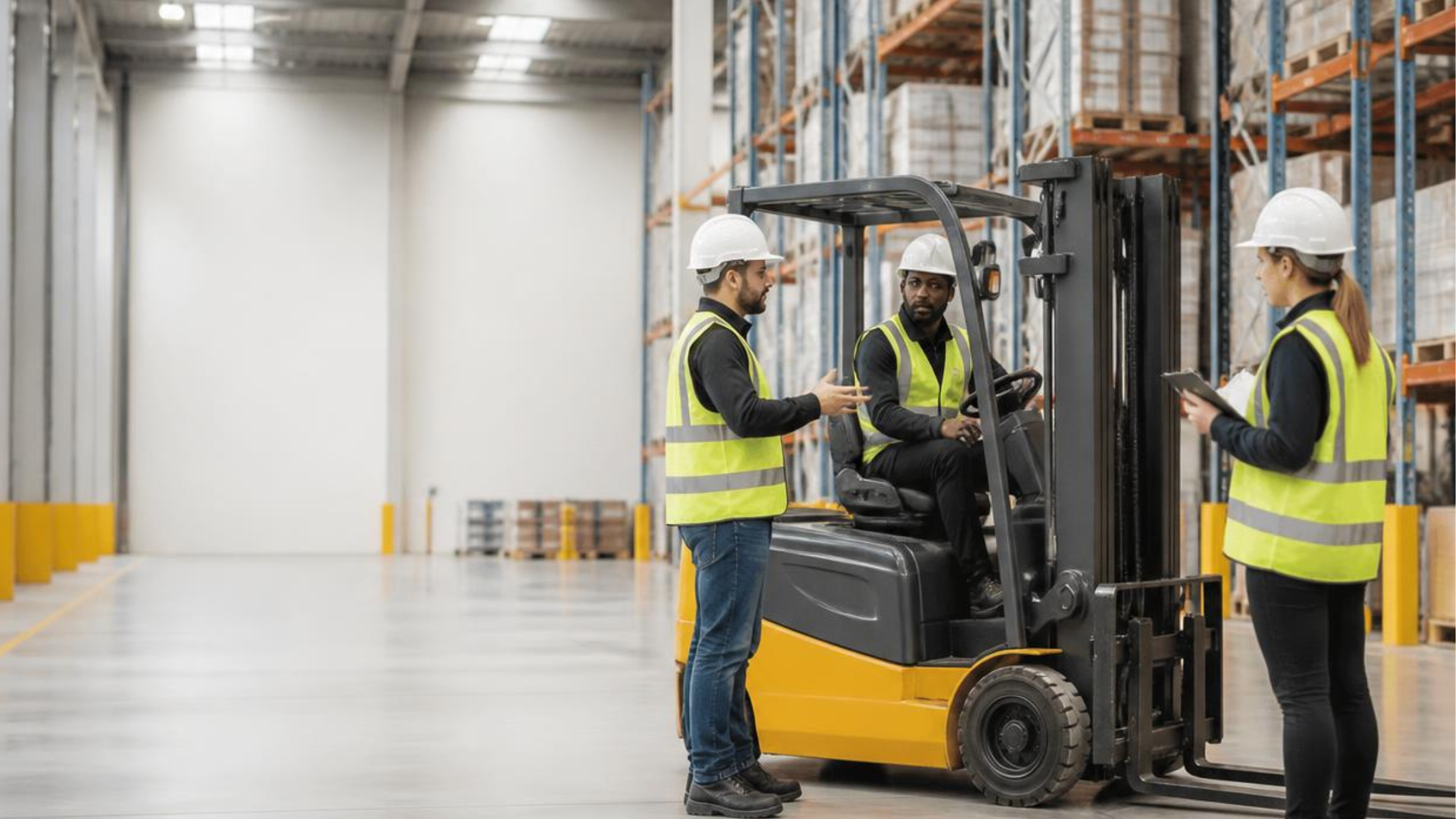
Forklift operator receiving workplace transport training in a UK warehouse with instructor supervising safe equipment operation.

Why This Matters for Employers

The biggest change is not simply the new category names. The revised standards place greater emphasis on ensuring operators are competent for the exact type of machine they are expected to use. Historically, some organisations assumed that if an operator held a forklift certificate, they could safely operate similar equipment with little additional training.

That assumption is no longer appropriate.

Moving between different truck types, different control systems or significantly different operating characteristics may require conversion training, followed by specific familiarisation training in the workplace before an operator can be considered competent.

Remember: A Certificate Does Not Automatically Mean Competence

One of the most common misconceptions is that holding a training certificate alone satisfies an employer's legal duties.

It does not.

Under the Provision and Use of Work Equipment Regulations (PUWER), employers must ensure anyone using work equipment has received adequate training and remains competent for the tasks they perform.

Competence includes:

  • Appropriate basic operator training

  • Conversion training where required

  • Familiarisation training on the specific machine and workplace

  • Ongoing supervision where appropriate

  • Refresher training when competence may have declined

Employers remain responsible for ensuring operators can work safely, regardless of when their original training took place.

Five Actions Every Employer Should Take

The introduction of the new workplace transport groupings provides a good opportunity to review existing training arrangements.

Businesses should:

  1. Audit all workplace transport equipment currently in use.

  2. Compare existing operator certifications with the revised ABA categories.

  3. Identify where conversion or familiarisation training may be required.

  4. Review training records to ensure they accurately reflect the equipment operators use.

  5. Work with an accredited workplace transport training provider to maintain compliance and competence.

Taking these steps now can help reduce operational risk while demonstrating due diligence should an incident occur.

Beyond Compliance: Building a Safer Workplace

Effective workplace transport training is not simply about passing an assessment.

Well-trained operators are more confident, make better decisions, reduce equipment damage, minimise downtime and contribute to a stronger safety culture.

For employers, investing in high-quality workplace transport training also helps improve productivity, reduce insurance risks and support compliance with health and safety legislation.

Ultimately, competence protects people, operations and business reputation.

How Circle Academy Can Help

Circle Academy works with businesses across warehousing, logistics, manufacturing, construction and industrial sectors to deliver accredited workplace transport training tailored to operational requirements.

Whether you need training for a single operator or an entire workforce, we can help you:

  • Understand the 2026 ABA changes

  • Review current operator competence

  • Deliver new operator, conversion and refresher training

  • Maintain compliant training records

  • Build a long-term workplace transport training programme

Our practical approach helps organisations improve safety while supporting operational performance.

Speak to a Workplace Transport Training Advisor

If you're unsure whether the 2026 changes affect your organisation, now is the ideal time to review your workplace transport training programme.

Our team can help you understand the new requirements, identify any gaps and recommend the most appropriate training for your operators.

Workplace Transport Training


Sources

  • Accrediting Bodies Association for Workplace Transport (ABA) – Workplace Transport Groupings (effective 19 January 2026)
  • British Safety Council – Why Workplace Transport Training Is Changing in 2026 and What It Means for Employers
  • Health and Safety Executive (HSE) – Workplace Transport Safety Guidance

    Disclaimer: This article is provided for general information only and does not constitute legal or professional advice. While every effort has been made to ensure accuracy at the time of publication, guidance and legislation may change. Employers should refer to the latest HSE and ABA guidance and seek professional advice where appropriate. Circle Academy, part of Circle UK Group, accepts no liability for decisions made based solely on the information contained in this article.

Sign Up Today – Expert Security & Safety Insights 

Mandatory Training Requirements UK Employers Must Meet in 2026

Mandatory Training Requirements UK Employers Must Meet in 2026

Every UK employer is legally required to provide specific workplace training. That is not opinion or best practice guidance - it is a statutory...

Read More
SIA Training Updates 2026: Essential Changes for Security Professionals

2 min read

SIA Training Updates 2026: Essential Changes for Security Professionals

If you work in the private security industry, or you're planning to start a career as a Security Guard, Door Supervisor or Close Protection...

Read More
Complete Guide to Obtaining an SIA Licence in the UK

Complete Guide to Obtaining an SIA Licence in the UK

If you want to work in the private security industry, obtaining an SIA Licence in the UK is a legal requirement. Whether you are aiming to become a...

Read More