 Circle Editor
1 min read
Security Guard Career Path in the UK
 Circle Editor : Feb 16, 2026, 12:21:20 PM
Security Guard Career Path in the UK: Qualifications, Progression & Opportunities The security industry in the UK employs over 400,000 people and...
By Circle UK Group Academy
Vetting is a fundamental part of working in the security industry, yet it is often misunderstood. Vetting is more than administrative formalities — it is a structured risk assessment process critical for safety and compliance. In reality, vetting is a critical risk‑control process that protects security officers, employers, and clients.
Security officers operate in environments built on trust. These include residential buildings, corporate offices, construction sites, and public‑facing locations. Clients expect that every officer deployed has been properly screened and meets recognised industry standards. When vetting is incomplete or inaccurate, the issue is not seen as administrative. It is seen as a failure of trust.
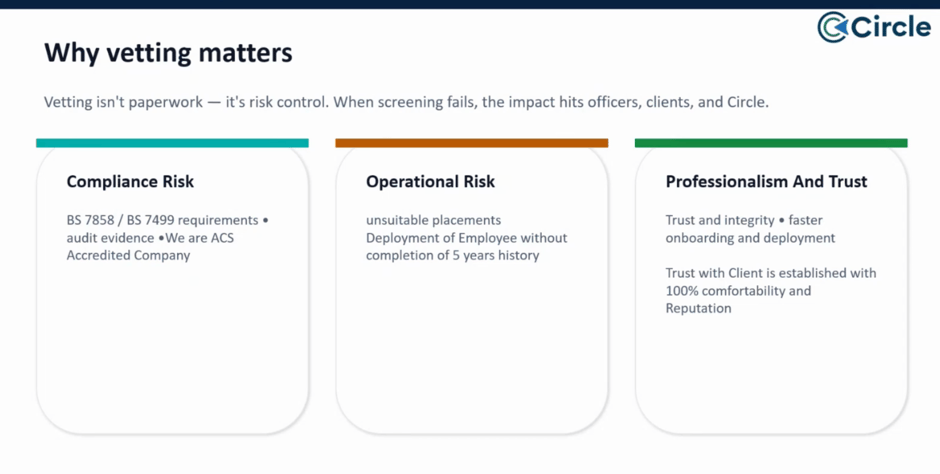
Vetting exists to manage risk. It ensures that individuals working in security roles are suitable, reliable, and legally compliant. From an employer’s perspective, vetting protects contracts, accreditations, and reputation. From an officer’s perspective, it protects deployment opportunities, income, and professional credibility.
When vetting problems are identified during audits, the consequences can be immediate. Officers may be removed from site, deployments can be delayed, and client confidence can be damaged. These outcomes often arise not from misconduct, but from missing information, late responses, or inconsistencies in records.
In the UK security sector, vetting is governed by recognised standards, most notably BS7858 and BS7499. These standards set out clear requirements for screening individuals working in security roles. Clients regularly audit employers against these standards to ensure compliance.
Failure to meet vetting requirements can result in audit non‑conformances, increased scrutiny from clients, and, in serious cases, risk to contracts and accreditations. For this reason, accurate and up‑to‑date vetting is essential for both operational continuity and business stability.
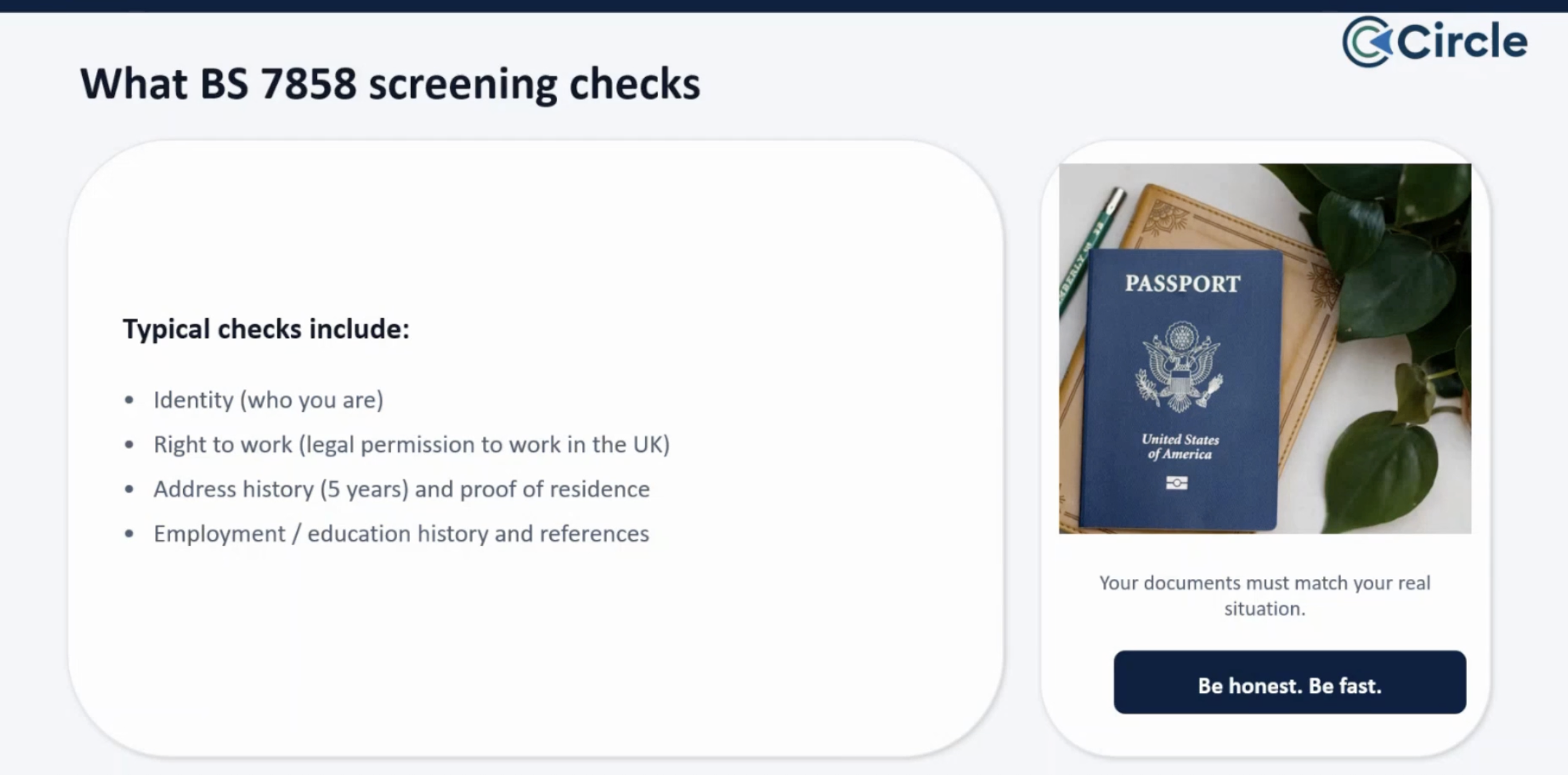
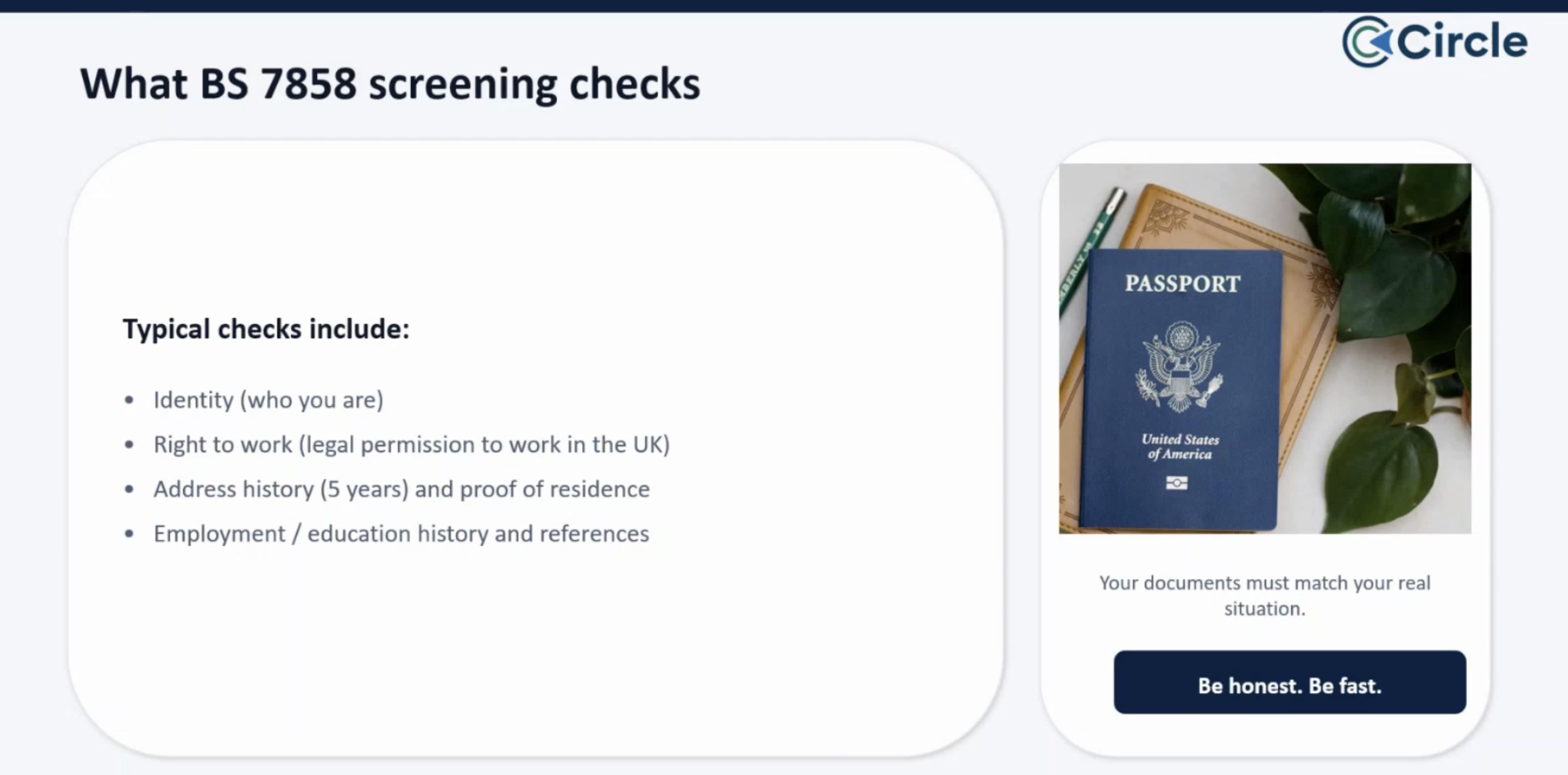
BS7858 screening is designed to assess whether an individual can be trusted in a security role. It typically includes identity verification, confirmation of the right to work in the UK, a five‑year address history, and a full employment or education history covering the same period. References are also required to verify past employment or education.
Accuracy is essential throughout this process. Even small discrepancies, such as different addresses shown on documents or name variations across records, can cause vetting to pause while further checks are completed. These delays are avoidable when information is complete, consistent, and truthful from the outset.
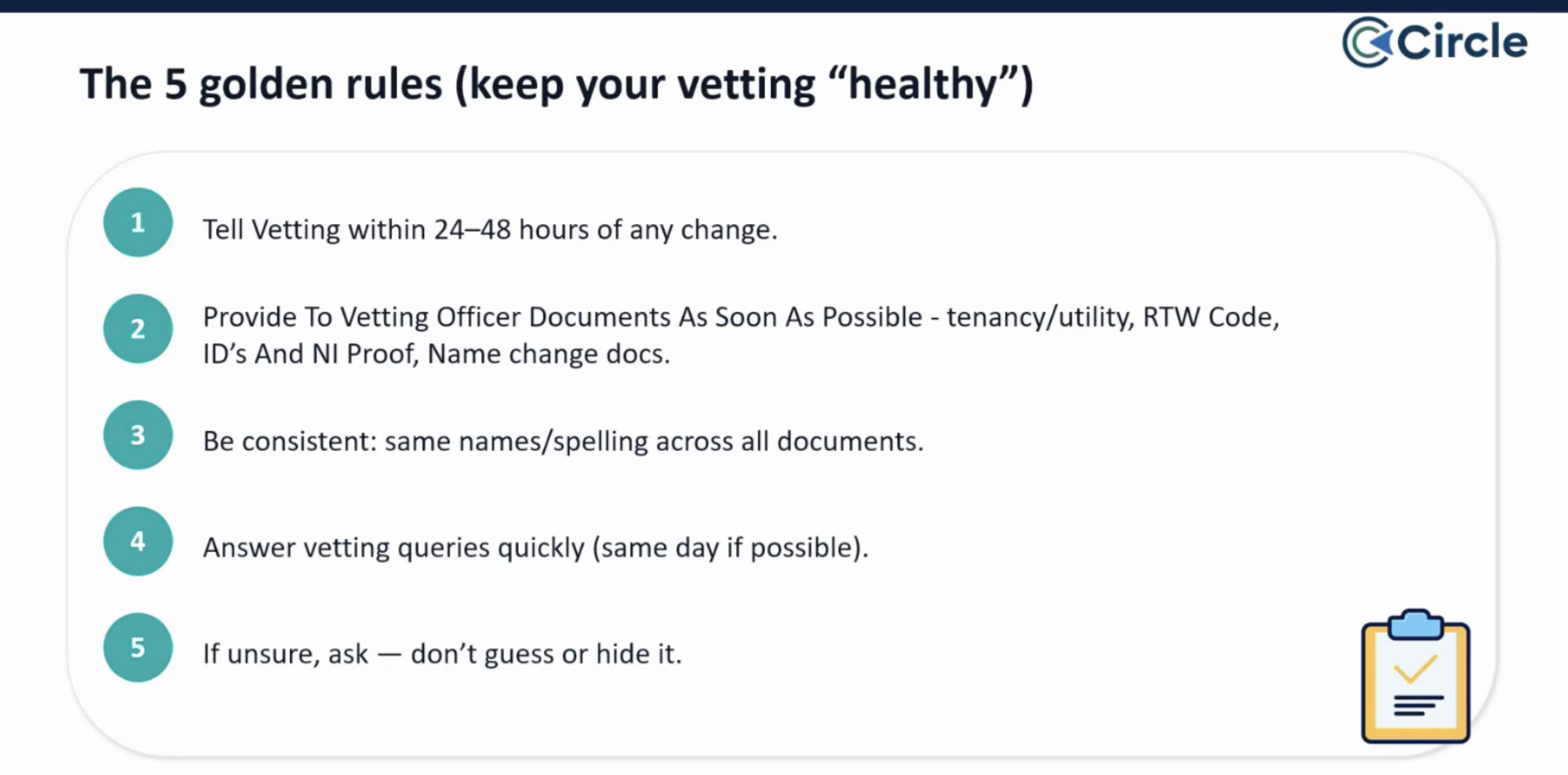
Vetting does not end once an officer is employed or deployed. It is an ongoing obligation. Officers are required to inform their employer promptly if key details change. This includes changes to address, name, right‑to‑work status, employment circumstances, or secondary employment.
Delays in reporting changes can create compliance issues during audits. Best practice is to notify the vetting team within 24 to 48 hours of any change and provide supporting documents as soon as possible. SIA licence holders must also ensure that changes are updated through their SIA online account.
Many vetting issues arise from simple and avoidable problems. These include references that do not respond, incomplete employment histories, slow responses to vetting enquiries, or inconsistencies in names and dates across documents. In some cases, officers stop responding to emails or phone calls, which can result in deployment being paused.
Clear and timely communication is the most effective way to prevent these issues. When officers engage with the vetting process and raise questions early, most problems can be resolved quickly.

When vetting requirements are not met, the impact can be significant. Officers may experience delayed start dates, suspension from duties, or loss of income due to missed shifts. Employers may face audit failures, increased administrative costs, client dissatisfaction, and reputational damage.
Maintaining accurate vetting records is therefore not just a compliance exercise. It is a professional responsibility that supports safety, trust, and long‑term career stability.
View Webinar Recording👇
.png?width=1200&height=628&name=CUKG%20Events%20(1).png)
Good vetting practice is built on honesty, accuracy, and responsiveness. Officers should keep clear records, maintain digital copies of key documents, and respond promptly to vetting enquiries. If there is uncertainty about whether something needs to be declared, it is always better to ask than to assume.
Vetting is not designed to prevent people from working. It exists to support safe deployment, protect clients, and safeguard professional standards across the industry.
In the security industry, trust is everything. Proper vetting underpins that trust. By understanding vetting requirements and taking personal responsibility for keeping information accurate and up to date, security professionals can protect their careers, support their employers, and contribute to safer, more compliant operations.
Circle UK Group Academy is committed to supporting security professionals with clear guidance, training, and industry knowledge. Strong vetting is not a barrier to work. It is a foundation for professionalism and long‑term success.



Join over 5,000 professionals receiving practical insights, industry updates and expert guidance on security, compliance, health & safety and business continuity.

1 min read
Circle Editor : Feb 16, 2026, 12:21:20 PM
Security Guard Career Path in the UK: Qualifications, Progression & Opportunities The security industry in the UK employs over 400,000 people and...

1 min read
Circle Editor : Aug 19, 2026, 11:37:48 AM
Working as a security officer can be the beginning of a much broader career in the security industry. With experience and the right professional...
2 min read
Circle Editor : Jul 9, 2026, 4:05:34 PM
If you work in the private security industry, or you're planning to start a career as a Security Guard, Door Supervisor or Close Protection...