1 min read
Security Solutions for Construction Sites: What Works in the UK
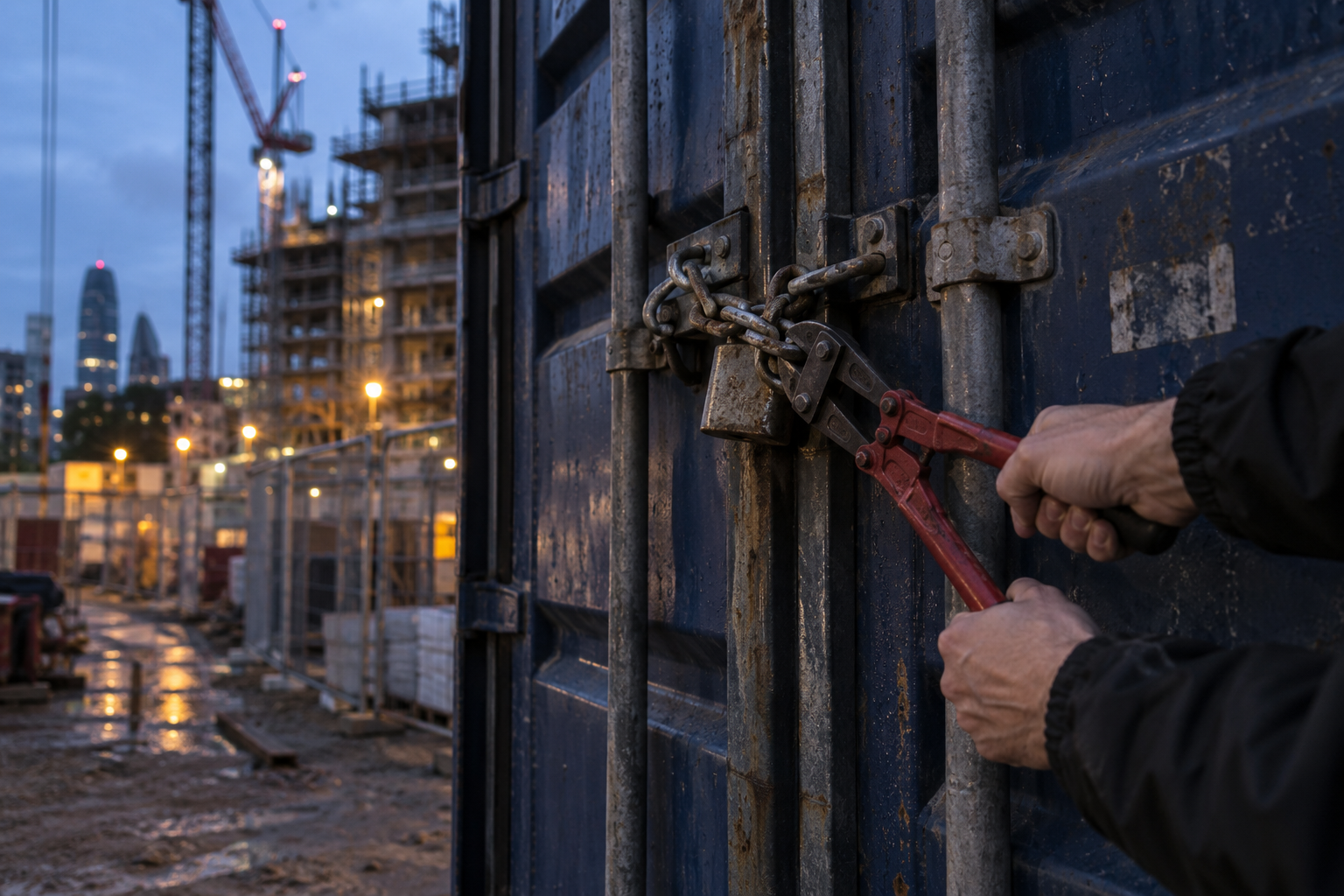
Construction sites are prime targets for theft, vandalism and unauthorised access. High-value equipment. Open perimeters. Limited overnight...
4 min read
Kyri Anastasi
:
Updated on November 24, 2026
Newly released police data highlights the scale of construction site crime across the UK, raising important questions about how contractors protect their assets, workforce and project continuity.
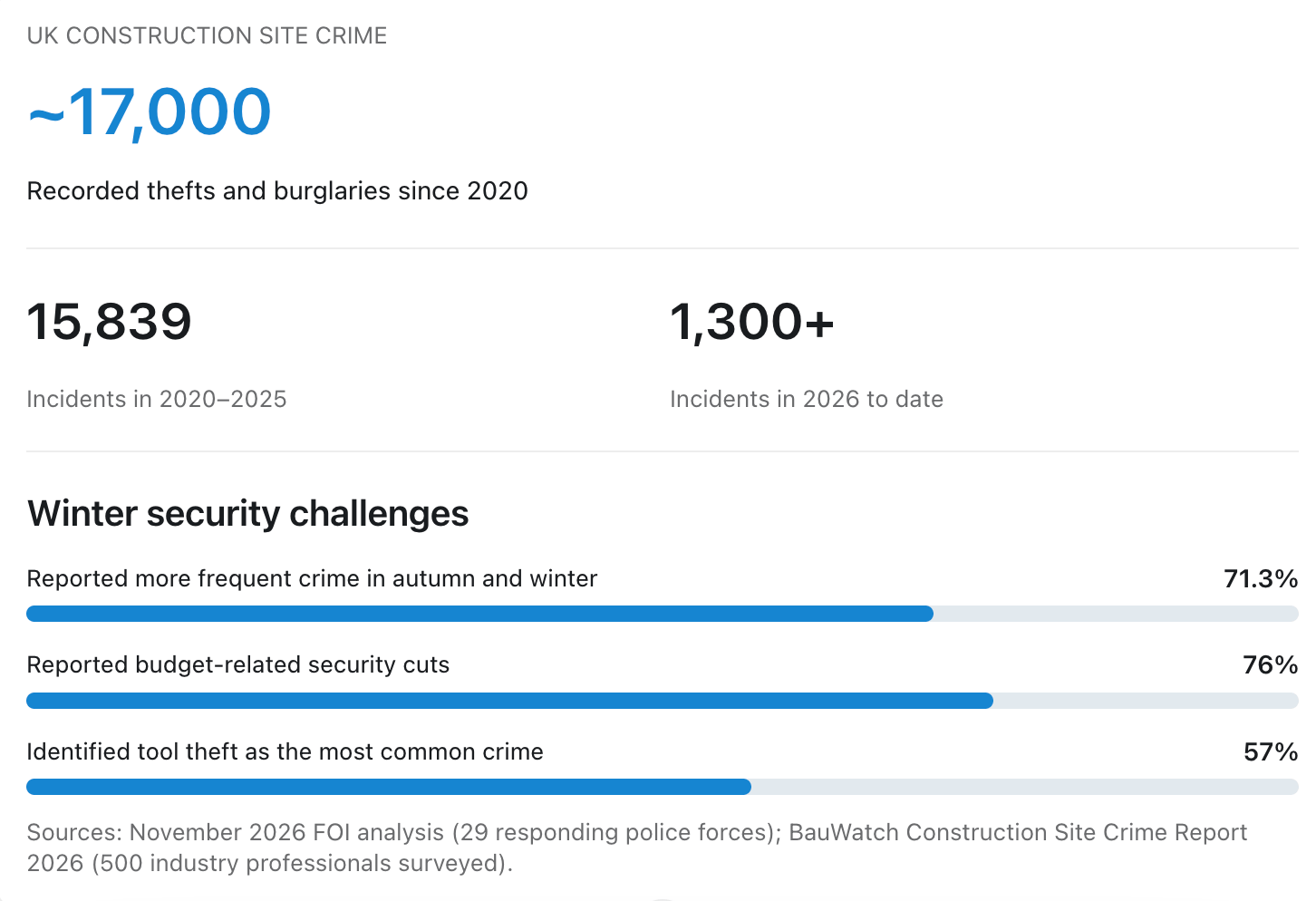
With around 17,000 thefts and burglaries recorded on construction sites since 2020, security should be considered a fundamental part of construction risk management rather than an additional operational expense.
As winter approaches and businesses prepare for Christmas shutdowns, construction companies should take this opportunity to review their existing security arrangements.
Research published on 20 November 2026, based on Freedom of Information requests submitted by Nothing But Padlocks, highlights the scale of recorded construction site crime.
The findings reveal:
Only 29 of the 44 police forces contacted responded to the request, meaning the figures do not represent the full national picture.
Construction environments present a unique combination of security challenges.
Unlike permanent commercial premises, construction sites are constantly changing. Access points move, temporary structures are installed, equipment is relocated and valuable materials arrive throughout different project phases.
Common security vulnerabilities include:
Inadequate perimeter protection.
Uncontrolled access to construction compounds.
Insufficient lighting and CCTV coverage.
High-value machinery and materials stored on site.
Limited security presence outside working hours.
Security arrangements that have not evolved alongside project development.
These vulnerabilities can create opportunities for both opportunistic theft and more organised criminal activity.

The financial impact of construction theft extends far beyond the replacement value of stolen equipment.
A single security incident can result in:
Project delays and missed deadlines.
Unexpected equipment replacement or hire costs.
Disruption to subcontractors and supply chains.
Potential contractual penalties.
Increased insurance costs.
Additional administrative and investigation requirements.
Reduced workforce productivity.
For construction businesses operating under tight margins and demanding delivery schedules, an avoidable security incident can significantly affect project profitability.
Effective construction site security is therefore not simply about protecting assets. It is about protecting business continuity.
Shorter daylight hours, reduced site activity and extended periods without regular staff presence can increase construction site vulnerability.
The BauWatch Construction Site Crime Report 2026, based on a survey of 500 UK construction industry professionals, found that:
71.3% reported crime being more frequent during autumn and winter.
76% reported budget pressures leading to reductions in security measures.
57% identified tool theft as the most common type of crime.
These findings highlight the importance of reviewing security arrangements before sites become less active or temporarily close.
Construction managers should establish clear monitoring, incident escalation and response arrangements throughout the shutdown period.
👉Read our Winter Construction Site Security Checklist.
The most effective approach combines physical protection, security technology, trained personnel and clearly defined operational procedures.
Review your site's current vulnerabilities, asset values, access arrangements and operational requirements.
Security risk assessments should be updated as the project progresses and whenever significant operational changes occur.
Ensure fencing, gates, barriers and storage facilities are appropriate for the level of risk.
Regular inspections and controlled access procedures can help reduce unauthorised entry.
Rapid-deployment CCTV towers and wireless intrusion detection systems can provide flexible protection for construction environments, including locations with limited permanent infrastructure.
Remote monitoring and agreed response procedures can support earlier intervention when suspicious activity is detected.
Depending on the site's risk profile, trained security officers and mobile patrols can provide a visible deterrent, support access management and respond to security incidents.
Maintain accurate asset records, secure storage arrangements and appropriate equipment tracking measures.
Where practical, coordinate deliveries to minimise the amount of valuable material stored on site unnecessarily.
Every construction site should have defined procedures for reporting, escalating and responding to security incidents.
Responsibilities should be understood by site managers, contractors, security personnel and monitoring teams.

Under Regulation 18 of the Construction (Design and Management) Regulations 2015, reasonable steps must be taken to prevent unauthorised access to construction sites.
While the regulations do not prescribe a specific security system for every project, construction businesses must consider appropriate measures based on their site's characteristics and risks.
Effective security arrangements can also support wider health and safety responsibilities by reducing unauthorised access to potentially hazardous environments.
A security solution that works during groundworks may not provide sufficient protection during later construction phases.
As projects develop, the location of valuable assets, access points and operational risks will change.
An integrated approach to construction security should combine:
Physical security and manned guarding.
Mobile security patrols.
Rapid-deployment CCTV towers.
Wireless intrusion detection.
Remote monitoring and alarm response.
Ongoing security risk assessments.
By coordinating these measures through a single accountable security partner, construction businesses can reduce operational complexity and maintain more consistent protection throughout the project lifecycle.
“One of the most common mistakes in construction site security is treating protection as a one-off decision rather than an ongoing process. As a project develops, its risk profile changes. Security measures that were effective at the beginning may no longer be sufficient months later. Regular risk assessments, layered protection and clear incident response procedures are essential to maintaining effective site security.”
Kyri Anastasi | Security & Risk Management, CEO at Circle UK Group
Building security into the project from the planning stage, rather than reacting after an incident, can help contractors reduce financial losses, minimise operational disruption and protect project continuity.
The latest construction crime figures reinforce a clear message: security should be planned proactively, not introduced only after an incident occurs.
At Circle UK Group, we help construction businesses protect their people, assets and operations through integrated security and risk management solutions tailored to each project's requirements.
From temporary construction compounds to large-scale infrastructure developments, our approach combines professional security services, flexible technology and practical risk management support.
One partner. Total risk control.
Sources
1 min read
Construction sites are prime targets for theft, vandalism and unauthorised access. High-value equipment. Open perimeters. Limited overnight...
1 min read
Construction site crime is not simply a matter of replacing stolen equipment. A single incident can stop work, affect subcontractors, increase...
1 min read
Construction site theft has become one of the most serious operational challenges facing UK construction owners. From stolen tools and van break-ins...