 Circle Editor
1 min read
What Is Driving Demand for Warehouse Security Guards in the UK?
 Circle Editor : Aug 26, 2026, 4:29:59 PM
UK warehouses and distribution centres are under increasing pressure to protect stock, people and day-to-day operations.
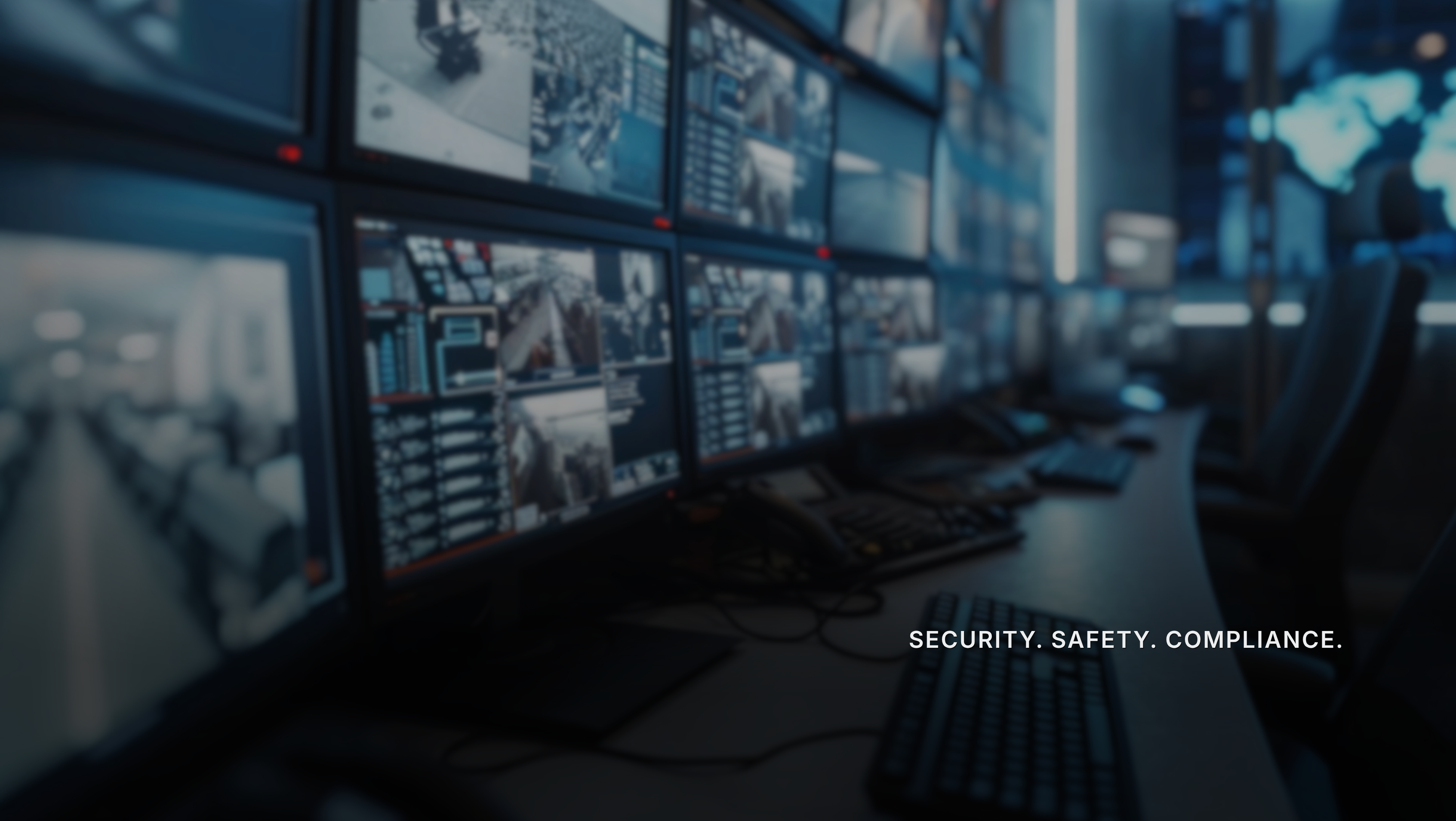
The right security solution is not automatically the newest camera system, the largest guarding team or the cheapest monitoring contract. It is the combination of controls that can detect credible threats, verify what is happening and produce an effective response within the time available.
For UK site owners, facilities managers and operations leaders, the choice between CCTV, security guards and remote monitoring should begin with a site-specific risk assessment. Each option has strengths, limitations and operating requirements. On many sites, the most resilient answer is a blended model rather than a single control.
Use CCTV when you need visual coverage, deterrence, event verification and recorded evidence. Use security guards when the site requires human judgement, access control, visible reassurance, intervention or immediate support for employees and visitors. Use remote monitoring when alerts need to be reviewed and escalated by trained operators without maintaining a permanent officer at every location.
The correct decision depends on the threat, the site, the hours of operation and the response required. A camera that records an incident but triggers no action may not prevent loss. A guard who cannot see a remote perimeter may receive the warning too late. A remote operator can verify an alarm, but cannot physically secure a gate or support an injured person.
| Solution | Best suited to | Main limitation |
|---|---|---|
| CCTV | Deterrence, detection, investigation, evidence and oversight of defined areas | Recorded footage alone does not create an immediate response |
| Security guards | Access control, patrols, public contact, judgement, intervention and incident support | One officer cannot observe every area continuously |
| Remote monitoring | Out-of-hours protection, alarm verification, multiple sites and rapid escalation | Depends on reliable detection, communications and a defined physical response |

CCTV can provide a consistent view of entrances, boundaries, car parks, loading areas, corridors and critical assets. It may deter opportunistic activity, help operators verify alarms and preserve evidence for investigation. Modern video analytics can also identify behaviours such as perimeter crossing, loitering or movement in restricted areas.
The National Protective Security Authority's CCTV guidance describes video surveillance as part of a coordinated security solution. This is an important distinction. Cameras perform best when their purpose, field of view, image quality, lighting, monitoring and response arrangements are designed together.
specific approaches, access points or high-risk zones require visual coverage;
recorded evidence is important for investigation, insurance or enforcement;
the site needs verification before an alarm is escalated;
security teams need better visibility across a large or complex environment;
technology can be integrated with alarms, access control and response procedures.
Where CCTV alone can leave gaps
A camera cannot challenge a suspicious visitor, check identification, manage a queue or physically investigate an open door. Its value also depends on practical details. Blind spots, poor lighting, vegetation, dirty lenses, weak network security, incorrect time settings and unclear retention arrangements can all reduce effectiveness.
Our guide to CCTV installation and remote monitoring explains how cameras, analytics, alarms and operator response can work together across commercial, construction and vacant sites.
Security officers provide something technology cannot fully reproduce: judgement in a changing environment. A trained officer can recognise unusual behaviour, assess context, communicate with people, apply site procedures and adapt when the expected process no longer fits the situation.
Guards can also support activities that sit between security, safety and customer service. This can include managing gates, checking vehicles, protecting lone workers, responding to alarms, preserving evidence, assisting during evacuation and maintaining a visible presence at locations used by employees, contractors or the public.
identity, authorisation or documentation must be checked before access is allowed;
the site is occupied around the clock or has significant public contact;
an incident requires immediate assessment or physical action;
valuable goods, sensitive areas or critical processes need close protection;
security duties interact with emergency, fire, traffic or lone-working procedures.
A single officer has a limited field of view and cannot be everywhere at once. Repetitive observation can also reduce attention, while breaks, competing tasks and poorly designed post instructions can create predictable gaps. Guarding should therefore be based on a defined operational requirement, supported by suitable technology and measured against outcomes rather than hours alone.
For operational sites, our warehouse security guards risk assessment guide shows how guarding, patrols, CCTV, access control and site procedures should be aligned with live activity and risk.
Remote monitoring connects cameras, alarms and other detection systems to trained operators at a monitoring centre. When an alert is generated, an operator can review images, follow a verification process, issue an audio warning where appropriate and escalate to a keyholder, mobile response team or emergency service under an agreed protocol.
This model can provide efficient coverage across several sites or during periods when buildings are unoccupied. It is particularly useful for construction sites, vacant properties, warehouses after hours, plant compounds, car parks and distributed estates where maintaining a permanent officer at every location may not be proportionate.
Remote monitoring is only as strong as the chain connecting detection to response. The design must account for power and network loss, alarm transmission, camera coverage, operator instructions, escalation contacts, access arrangements and response times. A verified incident still requires someone with the authority and capability to act.
Layered security allows one control to compensate for the limitations of another. CCTV and sensors can extend awareness. Remote operators can verify alerts and coordinate escalation. On-site officers or mobile responders can investigate, intervene and support people. Managers can use incident data to adjust patrols, operating procedures and investment priorities.
A blended model might include:
a security officer at the main gate during operating hours;
video analytics covering perimeter and loading areas;
remote monitoring during nights and weekends;
mobile response for verified alarms;
access control records linked to incident review;
scheduled management reviews of alerts, response times and recurring vulnerabilities.
This does not mean every site needs every control. The objective is to create a complete detection, verification and response chain for the risks that matter most.
Identify the people, property, information, equipment, stock and operations that could be harmed or disrupted. Prioritise assets according to consequence, not replacement value alone.
Consider theft, unauthorised access, vandalism, violence, insider activity, arson, protest, trespass and business interruption. Use incident history, local intelligence and operational change to test assumptions.
Risk may change by entrance, shift, delivery period, season or occupancy. A busy reception has different requirements from an isolated yard at 03:00. Map vulnerabilities against time as well as location.
Define the maximum acceptable time from detection to verification and action. If harm could develop in seconds, recording alone is unlikely to be sufficient. If the objective is investigation after a low-impact event, a different model may be proportionate.
Visitor management, driver checks, conflict de-escalation and emergency support usually require a trained person. Clarify which duties must happen on site and which can be supported remotely.
Test power, communications and equipment dependencies. Establish fault reporting, maintenance, temporary controls and escalation arrangements. A resilient plan should not assume every system will remain available during an incident.
Useful measures include detection accuracy, false alarms, verification time, response time, access exceptions, repeated vulnerabilities, camera availability, patrol exceptions and completion of corrective actions. Review whether controls reduce risk, not simply whether they are present.
Organisations using CCTV and other surveillance technologies must consider data protection, privacy and governance. The Information Commissioner's Office CCTV and video surveillance guidance covers installation, operation, transparency, signage and management of recorded information.
The security purpose should be documented, and the system should be necessary and proportionate to that purpose. Organisations should also define access to footage, retention periods, cyber security, staff responsibilities and a process for handling requests or incidents. Remote access makes secure authentication, encryption and supplier assurance particularly important.
Assess your site's threats, vulnerabilities and response requirements before investing in guards, CCTV or remote monitoring. Circle UK Group can help you build a proportionate, integrated security model.
Do not begin with a preferred product or an assumed number of guarding hours. Begin with the operational requirement: what must be detected, how it will be verified, who must respond and what evidence is needed afterwards.
CCTV can extend visibility and preserve evidence. Security guards bring judgement, presence and physical capability. Remote monitoring can provide scalable supervision and rapid verification. The strongest solution is the one that closes the full chain between risk, detection and response while remaining proportionate to the site.
For many organisations, that means combining people and technology, then reviewing performance as the site, threat and operating model change.


Join over 5,000 professionals receiving practical insights, industry updates and expert guidance on security, compliance, health & safety and business continuity.
1 min read
Circle Editor : Aug 26, 2026, 4:29:59 PM
UK warehouses and distribution centres are under increasing pressure to protect stock, people and day-to-day operations.

1 min read
Circle Editor : Nov 4, 2025, 12:30:00 AM
CCTV & Security Technology UK: Smarter Protection for Businesses and Sites Security is evolving. Traditional guarding remains essential, but...
1 min read
 Kyri Anastasi : Aug 28, 2026, 12:12:15 PM
Warehouse security guards are most effective when their duties are based on how a site actually operates, not on a generic post schedule. Warehouses...