 Circle Editor
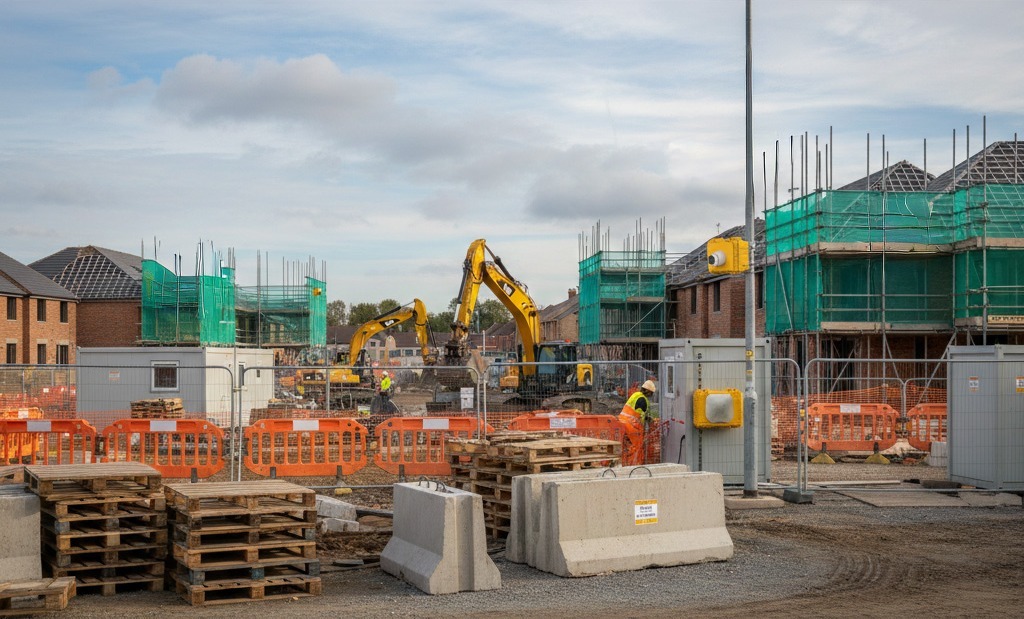
Theft, fire hazards, and unauthorised access cost UK construction projects thousands in lost time and unplanned expenditure every year. For site directors managing temporary builds, the challenge is not whether to install an alarm system. It is making that system work reliably across a site that changes shape, loses power, and operates in conditions most fixed-security technology was never designed for.
Effective construction site alarm systems require a structured approach that accounts for the realities of temporary environments.
Circle UK Group helps construction companies address these operational gaps through integrated monitoring, rapid-deployment technology, and layered protection. This article identifies seven key challenges you are likely to face when managing alarm systems on temporary UK construction sites, and outlines practical measures to reduce both theft and fire risk.
Key Takeaways: Construction Site Alarm System Challenges
-
Temporary construction sites lack the stable power and connectivity that fixed alarm systems need to function
-
Changing site layouts force regular reconfiguration of detection zones, perimeters, and sensor positions throughout the build
-
False alerts triggered by wildlife, weather, and debris reduce response confidence and waste valuable operational time
-
Circle UK Group integrates alarms, CCTV towers, and physical response into one coordinated protection model
-
UK fire safety and CDM regulations require documented detection and prevention measures on active construction sites
Managing Alarm Systems on Temporary UK Construction Sites
1. Unreliable Power Supply on Temporary Sites
Most temporary construction sites do not have a permanent mains connection during early project phases. Traditional wired alarm systems depend on a stable power source, and without it, detection coverage drops entirely during the hours when sites are most vulnerable.
Solar-powered and battery-backed systems address this gap, but they introduce their own constraints. Battery life varies with temperature and usage, and solar panels need adequate daylight exposure. Circle UK Group deploys hybrid-powered alarm systems that combine solar, battery, and LTE connectivity to maintain protection without relying on mains infrastructure.
2. Weak or Inconsistent Network Connectivity
Alarm systems on remote or rural construction sites rely on mobile networks to transmit alerts to a monitoring centre. In areas with poor 4G coverage, alert delivery can be delayed or fail entirely. That delay creates a window during which an intrusion or fire event goes undetected.
Dual-SIM and multi-network configurations help maintain signal reliability. Systems that store and forward alerts when connectivity drops temporarily also reduce the risk of missed incidents. Your site survey should include a signal strength assessment at each planned sensor location before deployment begins.
3. Constantly Changing Site Layouts
Construction sites are not static environments. As builds progress, perimeters shift, structures go up, and access points move. An alarm configuration that covered the site adequately last month may leave significant blind spots today. Repositioning sensors and recalibrating detection zones takes time and specialist knowledge.
Wireless, modular alarm systems that can be relocated without re-cabling offer a practical solution. Circle UK Group designs alarm ecosystems using portable units such as the Circle Alarm Post and Circle Alarm Tower that adapt as site boundaries evolve, keeping detection aligned with your current risk profile.
4. High False Alert Rates
False alerts are one of the most common operational frustrations on construction sites. Wildlife, windblown debris, and weather conditions regularly trigger PIR sensors and perimeter beams. When false alerts become frequent, monitoring teams lose confidence in the system, and genuine threats risk being dismissed.
AI-driven monitoring filters environmental interference from genuine intrusion signatures. According to the BauWatch Crime Report 2026, 76% of UK construction professionals reported budget pressure leading to security cuts. Circle UK Group's monitoring technology reduces false alerts by over 92%, ensuring that when your team receives a notification, it warrants action.
5. Integrating Alarms With CCTV and Physical Response
An alarm that detects a breach but cannot verify it visually provides limited protection. Many construction sites run alarms, cameras, and guarding as separate services, resulting in slower verification and gaps in the response chain.
Integrated ecosystems connect alarms to CCTV towers and a 24/7 monitoring centre. When a sensor triggers, cameras auto-focus and operators issue a live audio challenge. If needed, the system escalates to manned guarding, K9 teams, or police. This layered model is how Circle UK Group structures site protection.
6. Meeting UK Fire Safety Requirements on Active Sites
Fire detection on construction sites is not optional. The Regulatory Reform (Fire Safety) Order 2005 and the CDM Regulations 2015 both place duties on those managing construction projects to assess and control fire risk. Exposed wiring and flammable materials increase the likelihood of fire events that destroy weeks of progress.
Wireless fire detection systems designed for temporary environments can be reconfigured as layouts change. These link to a central risk management platform that logs alerts, tracks compliance, and supports audit readiness.
7. Scaling Protection Across Multiple Sites
Construction companies managing several active sites simultaneously need alarm systems that scale without multiplying management complexity. Each site has different risk levels, layouts, and operational hours. Coordinating protection across a portfolio of projects using separate suppliers for each site creates inconsistency and accountability gaps.
A single-provider model with centralised monitoring and reporting gives you consistent standards and a unified view of risk across all your sites. Circle UK Group delivers integrated security across multiple locations from one operational platform, so your team maintains oversight without managing multiple vendor relationships.
How to Choose the Right Alarm System for Your Construction Site
Selecting an alarm system for a temporary construction site requires more than comparing product specifications. Start with a structured site risk assessment that maps your vulnerabilities, access points, high-value asset locations, and power availability. That assessment should inform every technology decision that follows.
Prioritise systems that are wireless, rapidly deployable, and designed to integrate with CCTV and physical security measures. Confirm that your provider can reconfigure the system as your site evolves, and that monitoring is backed by a 24/7 response capability. Circle UK Group works as a strategic partner in risk management, delivering tailored solutions that unify alarms, cameras, and on-site response into one coordinated protection model.
If your current approach relies on standalone technology without integration or structured response, now is the time to reassess. Request a site risk assessment from Circle UK Group and identify the gaps before they become incidents.
FAQs About Construction Site Alarm Systems
What is the most common alarm system challenge on UK construction sites?
Unreliable power supply is the most frequent obstacle. Temporary sites often lack mains connections during early build phases, which forces reliance on solar-powered or battery-backed alarm units.
Hybrid power configurations that combine solar panels, rechargeable batteries, and LTE connectivity help maintain continuous detection coverage without dependence on fixed infrastructure.
How do false alerts affect construction site security?
False alerts erode confidence in the monitoring system. When wildlife, weather, or debris triggers sensors repeatedly, response teams begin treating all notifications as low priority.
AI-driven filtering distinguishes genuine intrusion activity from environmental interference. Circle UK Group's monitoring technology reduces false alerts by over 92%, keeping response standards high.
Are wireless alarm systems reliable enough for construction sites?
Modern wireless alarm systems are designed specifically for harsh, temporary environments. They use industrial-grade sensors, encrypted communication, and multi-network SIM connectivity to maintain reliable performance.
Wireless systems also offer the advantage of rapid redeployment. As your site layout changes, sensors and detection zones can be reconfigured without re-cabling.
What UK regulations apply to fire detection on construction sites?
The Regulatory Reform (Fire Safety) Order 2005 requires a documented fire risk assessment for all non-domestic premises, including active construction sites. The CDM Regulations 2015 place additional duties on principal contractors to plan, manage, and monitor fire risk throughout the build.
Wireless fire detection systems that integrate with your broader fire safety strategy help you meet both sets of obligations.
Why should alarms be integrated with CCTV on a construction site?
Alarms detect a breach, but CCTV verifies it. Without visual confirmation, monitoring teams cannot assess the nature or severity of an incident. Integrated systems connect alarm triggers directly to camera feeds, enabling faster, more accurate escalation.
Circle UK Group connects alarm and CCTV systems into one ecosystem with live audio challenge, trained operators, and physical response capability.
How do you scale alarm protection across multiple construction sites?
A centralised monitoring model with standardised equipment and reporting protocols allows you to maintain consistent protection across multiple projects. Each site receives a tailored configuration, but all feed into one operational dashboard.
Circle UK Group manages multi-site alarm deployments from a single 24/7 control platform, giving you unified visibility without the complexity of coordinating separate providers.

Explore More

Stay Ahead of Security, Compliance & Risk
Join over 5,000 professionals receiving practical insights, industry updates and expert guidance on security, compliance, health & safety and business continuity.