---
title: "Staying Safe on Shift: A Practical Guide for Security Officers"
description: Guide for security officers on maintaining safety on shift by understanding hazards, legal responsibilities, and proactive risk management in dynamic environments.
image: https://circleukgroup.co.uk/hubfs/Screenshot%202026-03-19%20at%2015.13.23.png
---
[Skip to the main content.](https://circleukgroup.co.uk/safe-circle/staying-safe-on-shift-a-practical-guide-for-security-officers#main-content)
**CIRCLE UK GROUP** | SECURITY, SAFETY AND COMPLIANCE IN ONE SOLUTION
[Download Circle Overwatch](https://circleukgroup.co.uk/circle-overwatch) | 24/7 Helpline: **[020 3988 2444](tel:02039882444)**
[](https://circleukgroup.co.uk)
[](https://circleukgroup.co.uk)
- [Industries We Protect](https://circleukgroup.co.uk/protecting-businesses-across-sectors)
- [Integrated Solutions](https://circleukgroup.co.uk/complete-security-solutions)
- [Meet The Team](https://circleukgroup.co.uk/meet-the-team)
- [Insights](https://circleukgroup.co.uk/safe-circle)
- [Case Studies](https://circleukgroup.co.uk/case-studies)
- [News](https://circleukgroup.co.uk/safe-circle)
- [Training & Courses](https://circleukgroup.co.uk/circle-academy)
[Contact Us 24/7](https://circleukgroup.co.uk/contact)
Toggle Menu
Toggle Menu
[Contact Us 24/7](https://circleukgroup.co.uk/contact)
- [Industries We Protect](https://circleukgroup.co.uk/protecting-businesses-across-sectors)
- [Integrated Solutions](https://circleukgroup.co.uk/complete-security-solutions)
- [Meet The Team](https://circleukgroup.co.uk/meet-the-team)
- [Insights](https://circleukgroup.co.uk/safe-circle)
- [Case Studies](https://circleukgroup.co.uk/case-studies)
- [News](https://circleukgroup.co.uk/safe-circle)
- [Training & Courses](https://circleukgroup.co.uk/circle-academy)
- [Request Risk Assessment](https://circleukgroup.co.uk/en/identify-risks-tailored-mitigation-plans-circle-uk-group)
- [Security Services](https://circleukgroup.co.uk/security-services-uk)
- [Circle Alarm System](https://circleukgroup.co.uk/circle-alarm-systems)
- [Compliance & Training](https://circleukgroup.co.uk/circle-academy)
- [Stay informed - Sign Up](https://circleukgroup.co.uk/newsletter)
- [Download the Overwatch app](https://circleukgroup.co.uk/circle-overwatch)
[Facebook](https://www.facebook.com/circleukgroup) [Linkedin](https://www.linkedin.com/company/circleukgroup/) [YouTube](https://www.youtube.com/channel/UC8ckYEBLGRFEXxCfSvfOimA)
3 min read
# Staying Safe on Shift: Essential Tips for Security Officers
[ Circle Editor](https://circleukgroup.co.uk/safe-circle/author/circle-editor) : Updated on March 31, 2026
[Security](https://circleukgroup.co.uk/safe-circle/tag/security)
Staying Safe on Shift: A Practical Guide for Security Officers
8:07
Security officers play a critical role in maintaining safety across construction sites, infrastructure projects, and commercial environments. However, the role itself comes with exposure to risk.
Staying safe on shift is not just about following instructions. It requires awareness, responsibility, and the ability to make informed decisions in real time. A strong approach to health and safety protects individuals, supports operations, and ensures sites remain compliant and secure.
WATCH THE WEBINAR NOW 👇
## Why Health and Safety Matters
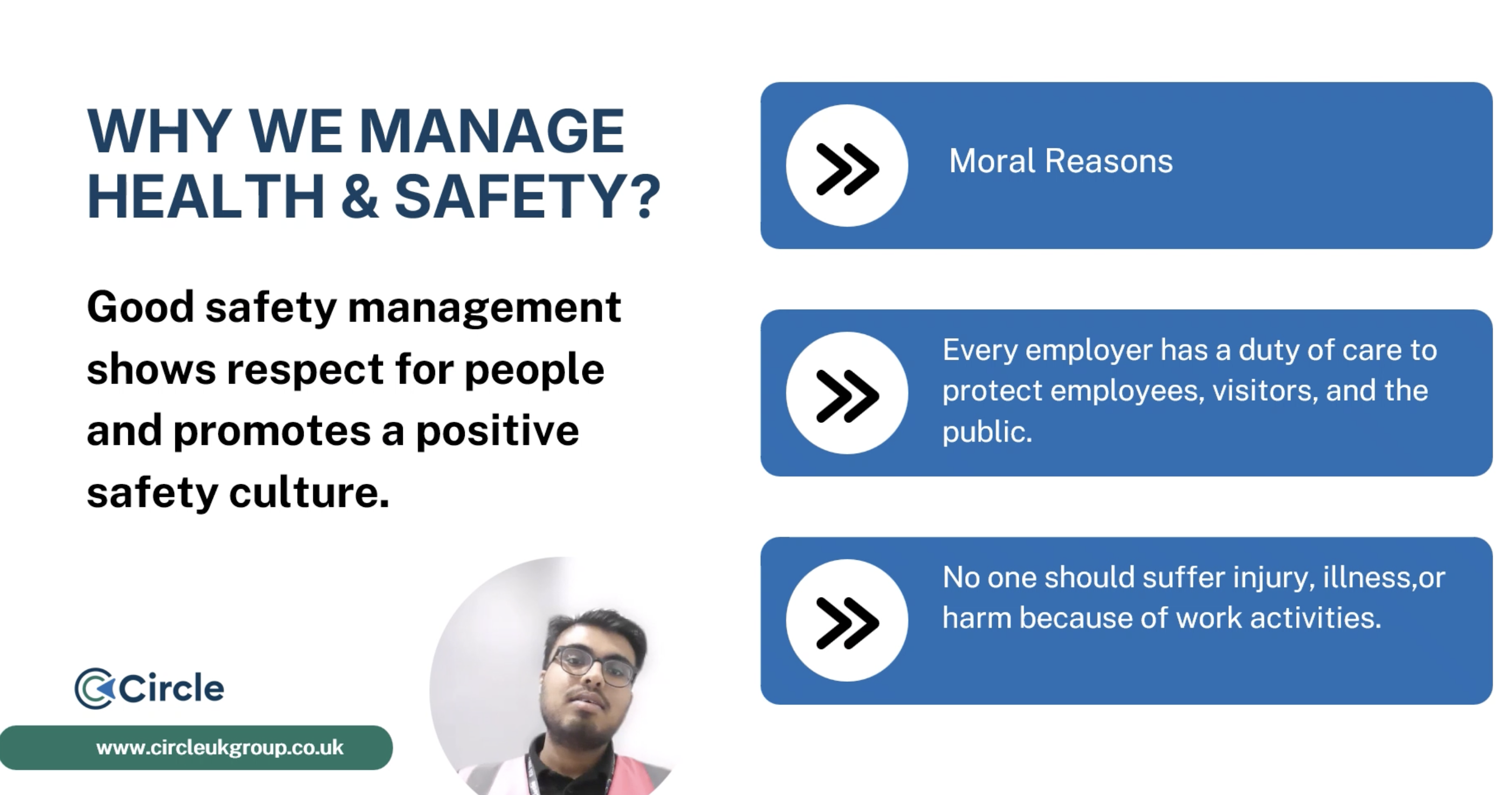
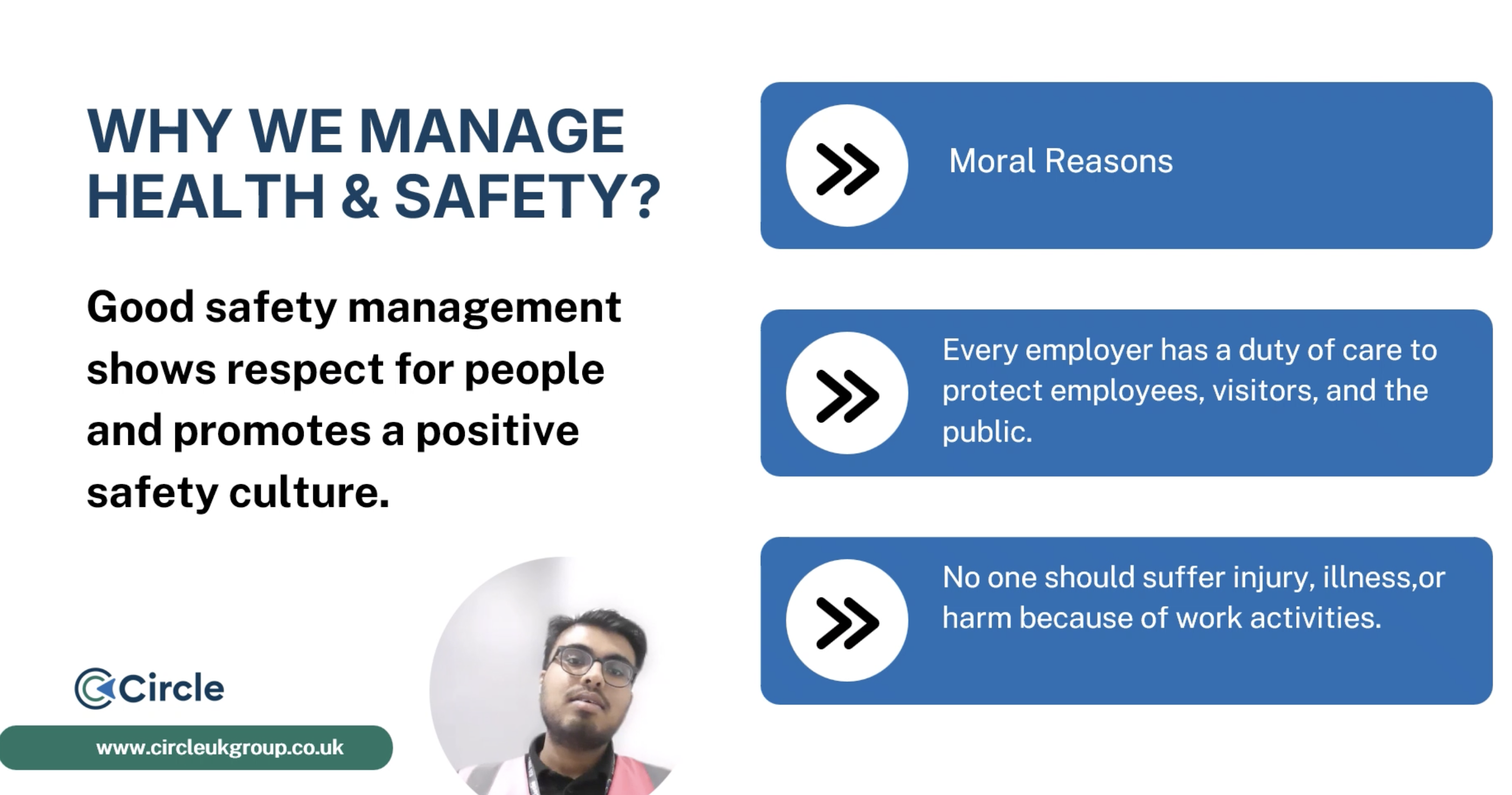
Health and safety is fundamentally about protecting people. This includes security personnel, site teams, visitors, and the public.
In high-risk environments such as construction and infrastructure, even small oversights can lead to serious consequences. A proactive approach reduces the likelihood of incidents, strengthens business continuity, and builds a culture where safety is taken seriously at every level.
Simple actions, such as reporting hazards early, can prevent significant harm.
## Understanding Hazards, Risks and Near Misses
Effective safety management starts with understanding key concepts.
A hazard is anything with the potential to cause harm. A risk is the likelihood of that harm occurring.
For example, a poorly lit walkway is a hazard. The risk is someone tripping or falling.
A near miss is an event that could have resulted in harm but did not. These incidents are often overlooked, but they provide valuable insight into potential weaknesses in safety controls. Reporting near misses allows corrective action before an actual incident occurs.
## Legal Responsibilities in the UK
Health and safety is governed by strict legal frameworks in the UK.
Legislation such as the Health and Safety at Work Act, the Management of Health and Safety at Work Regulations, and RIDDOR place clear responsibilities on both employers and employees.
Security officers are required to follow site procedures, work safely, and report hazards or incidents. Failure to comply can result in serious consequences, including legal action and financial penalties.
Understanding these responsibilities is essential for maintaining compliance and protecting both individuals and organisations.
## The Role of Security Officers in Risk Management
Security officers are often the first to identify potential risks on site.
Their position gives them visibility across operations, making them a key part of any risk management strategy. Responsibilities include monitoring environments, identifying hazards, following procedures, and reporting concerns promptly.
Being alert and proactive is essential. Early intervention can prevent escalation and reduce the likelihood of incidents.
## Dynamic Risk Assessment in Practice
Security environments are constantly changing. Static procedures alone are not enough.
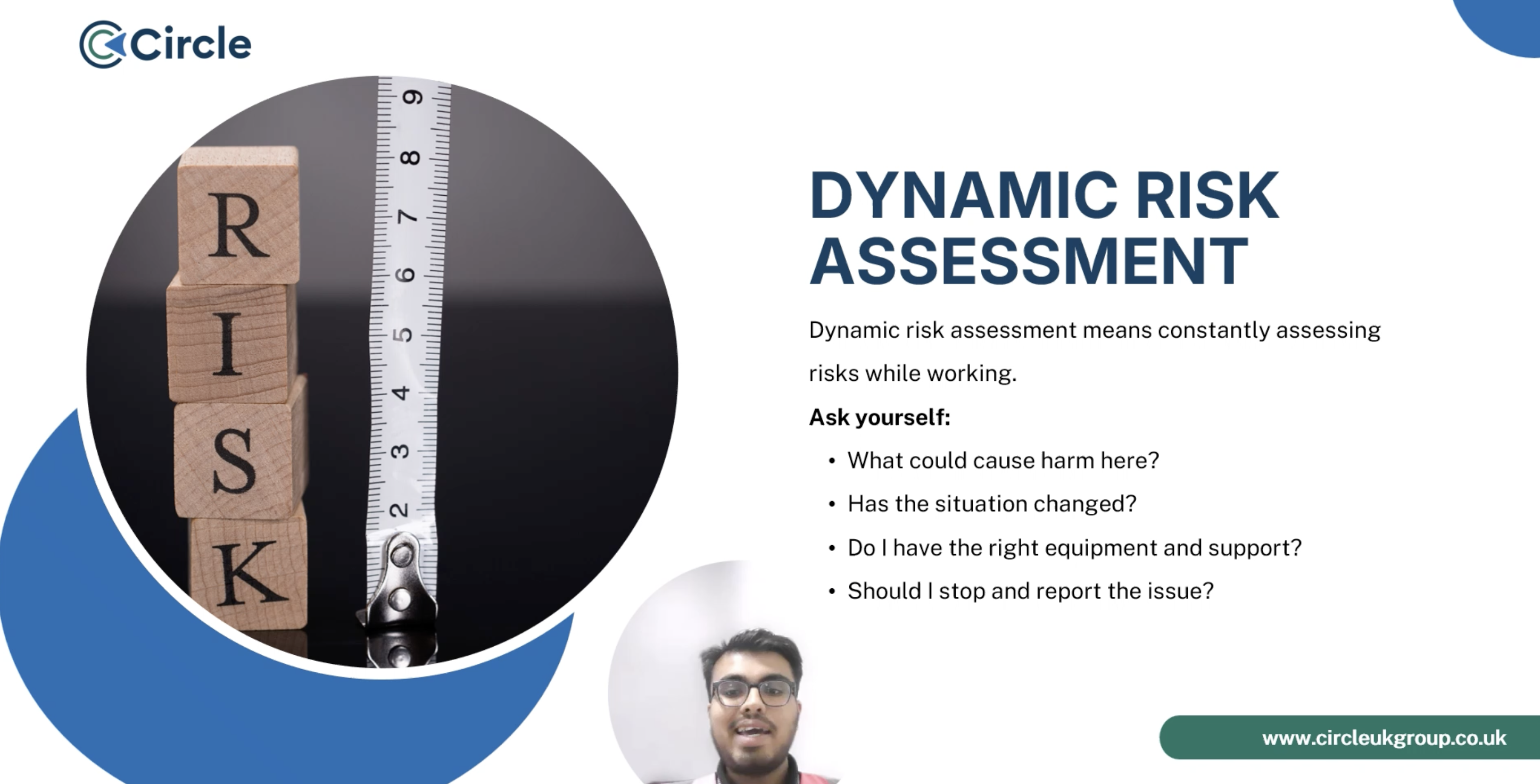
Dynamic risk assessment involves continuously evaluating surroundings and asking key questions such as whether conditions have changed, what could go wrong, and whether it is safe to proceed.
This approach ensures that decisions are based on current conditions rather than routine. If a situation appears unsafe, it should be paused and reported immediately.
## Managing Lone Working Risks
Lone working is common within the security sector and introduces additional challenges.
Risks can include dealing with aggressive behaviour, experiencing a medical emergency without immediate support, or sustaining an injury while isolated.
To mitigate these risks, organisations implement control measures such as regular welfare checks, communication systems, monitoring technology, and clear escalation procedures.
Security officers should always prioritise personal safety. The role is to observe and report, not to intervene in situations that could cause harm.
## Common Workplace Risks
### Slips, Trips and Falls
Slips and trips remain one of the most frequent causes of workplace injury.
They are typically caused by poor housekeeping, wet surfaces, or inadequate lighting. Maintaining clean, well organised environments and reporting hazards quickly can significantly reduce these risks.
### Manual Handling
Manual handling tasks should always be approached with care.
Assessing the load, planning movements, and using correct techniques are essential steps. Where necessary, assistance should be requested. Avoiding unnecessary strain prevents injuries that can have long term impact.
## The Importance of Reporting
Accurate and timely reporting is a core part of effective safety management.
All incidents should be reported, including injuries, property damage, security breaches, and unsafe conditions. Near misses should also be recorded, as they highlight potential risks before they result in harm.
Certain incidents must be reported under RIDDOR, making compliance with reporting procedures essential.
## Meeting Client and Auditor Expectations
Clients and auditors expect consistent, high standards of safety and professionalism.
Security officers are often the visible representation of a company’s operations on site. Their understanding of risks, adherence to procedures, and quality of reporting all contribute to overall performance.
Maintaining these standards supports trust, compliance, and long term partnerships.
## The Role of Personal Protective Equipment (PPE)
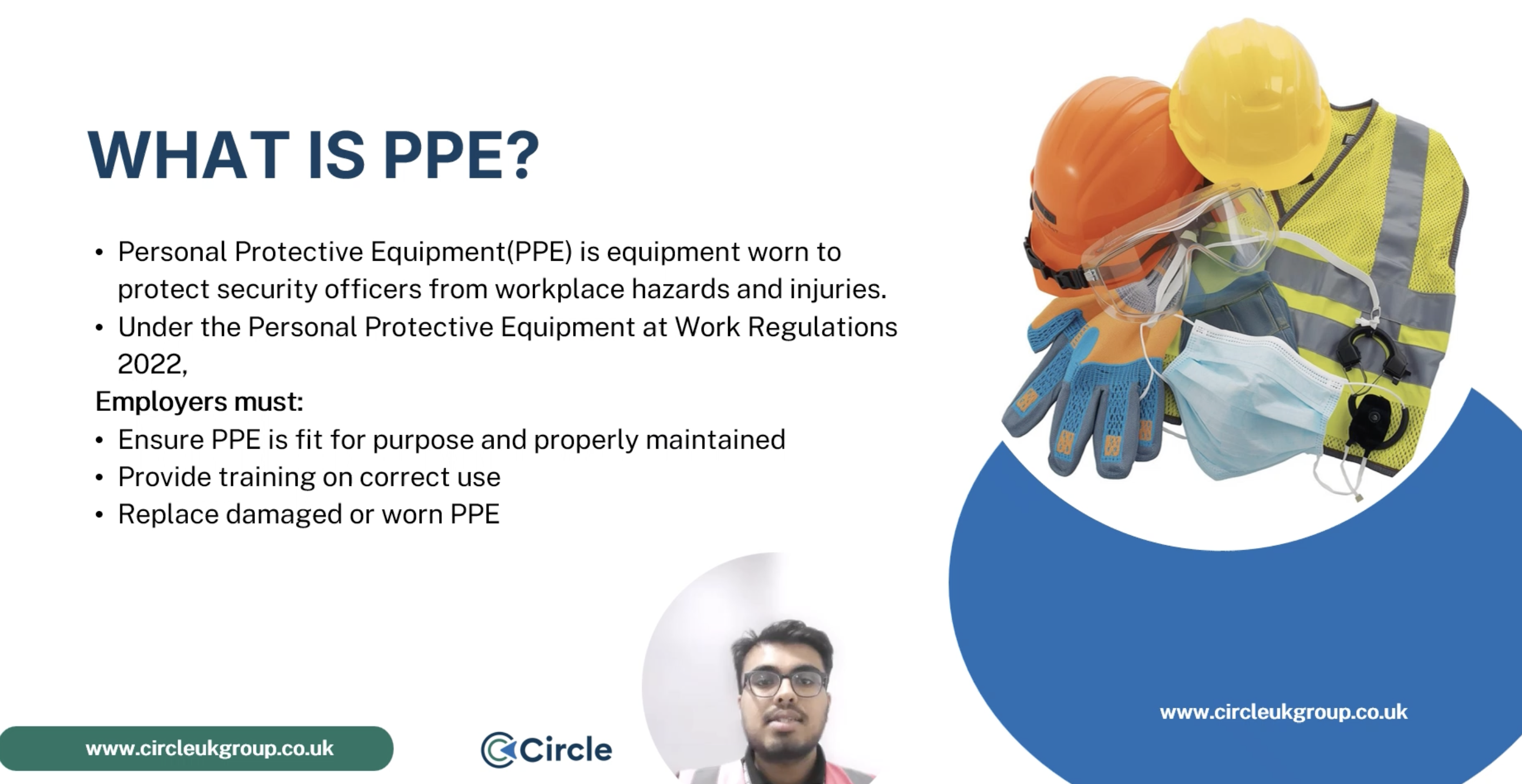
PPE provides an additional layer of protection against hazards.
Common equipment includes high visibility clothing, safety footwear, and body worn technology. All PPE should be checked before use and maintained in good condition.
However, PPE should never be relied upon as the primary control measure. Safe systems of work and risk awareness must always come first.
## Building a Strong Safety Culture
A strong safety culture is built on shared responsibility.
Everyone on site has a role to play in identifying risks, following procedures, and supporting safe working practices. When safety becomes part of daily behaviour rather than a checklist, the likelihood of incidents reduces significantly.
Organisations that prioritise safety not only protect their people but also improve performance, reputation, and operational resilience.
## Key Takeaway
Staying safe on shift requires constant awareness and accountability.
Security officers must remain alert, follow procedures, report hazards, and make informed decisions in real time.
If a situation is not safe, it should not be ignored or continued. Taking the right action at the right time protects individuals, supports teams, and ensures safe and effective site operations.
[](https://cta-redirect.hubspot.com/cta/redirect/20415666/ac95e83c-ebd5-4bc8-975e-42d67f74b4dc)
- [Tweet](https://twitter.com/share)
### Explore More
[](https://cta-redirect.hubspot.com/cta/redirect/20415666/00ca0807-6575-4d48-91db-0b8eda3bb99f)
---
### Stay Ahead of Security, Compliance & Risk
Join over **5,000 professionals** receiving practical insights, industry updates and expert guidance on security, compliance, health & safety and business continuity.
### Posts by Tag
- [Security (54)](https://circleukgroup.co.uk/safe-circle/tag/security)
- [News (31)](https://circleukgroup.co.uk/safe-circle/tag/news)
- [Risk Management (21)](https://circleukgroup.co.uk/safe-circle/tag/risk-management)
- [Health & Safety (14)](https://circleukgroup.co.uk/safe-circle/tag/health-safety)
- [Risk Assessment (14)](https://circleukgroup.co.uk/safe-circle/tag/risk-assessment)
- [Workplace Compliance (12)](https://circleukgroup.co.uk/safe-circle/tag/workplace-compliance)
- [Circle Academy (11)](https://circleukgroup.co.uk/safe-circle/tag/circle-academy)
- [HR Compliance (10)](https://circleukgroup.co.uk/safe-circle/tag/hr-compliance)
- [Warehouse Security (7)](https://circleukgroup.co.uk/safe-circle/tag/warehouse-security)
- [Security in Construction (6)](https://circleukgroup.co.uk/safe-circle/tag/security-in-construction)
- [CCTV (5)](https://circleukgroup.co.uk/safe-circle/tag/cctv)
- [Circle Alarms (5)](https://circleukgroup.co.uk/safe-circle/tag/circle-alarms)
- [Waking Watch Service (4)](https://circleukgroup.co.uk/safe-circle/tag/waking-watch-service)
- [Manned Guarding (3)](https://circleukgroup.co.uk/safe-circle/tag/manned-guarding)
- [Circle Overwatch (2)](https://circleukgroup.co.uk/safe-circle/tag/circle-overwatch)
- [Fire Safety (2)](https://circleukgroup.co.uk/safe-circle/tag/fire-safety)
- [Demolition Site Security (1)](https://circleukgroup.co.uk/safe-circle/tag/demolition-site-security)
- [Facility Management (1)](https://circleukgroup.co.uk/safe-circle/tag/facility-management)
See All
[](https://circleukgroup.co.uk/safe-circle/stolen-tools-and-theft-on-construction-sites)
1 min read
#### [Stolen Tools and Theft on Construction Sites: How UK Construction Owners Can Protect Their Projects](https://circleukgroup.co.uk/safe-circle/stolen-tools-and-theft-on-construction-sites)
[ Circle Editor](https://circleukgroup.co.uk/safe-circle/author/circle-editor) : Dec 12, 2025, 2:05:48 PM
Construction site theft has become one of the most serious operational challenges facing UK construction owners. From stolen tools and van break-ins...
[Security](https://circleukgroup.co.uk/safe-circle/tag/security) [Security in Construction](https://circleukgroup.co.uk/safe-circle/tag/security-in-construction)
[Read More](https://circleukgroup.co.uk/safe-circle/stolen-tools-and-theft-on-construction-sites)
[](https://circleukgroup.co.uk/safe-circle/7-alarm-system-challenges-on-uk-construction-sites)
1 min read
#### [7 Challenges of Managing Alarm Systems on UK Construction Sites](https://circleukgroup.co.uk/safe-circle/7-alarm-system-challenges-on-uk-construction-sites)
[ Circle Editor](https://circleukgroup.co.uk/safe-circle/author/circle-editor) : Jul 22, 2026, 10:00:15 PM
Managing construction site alarm systems on temporary UK sites takes more than plugging in a few sensors. Construction directors and site owners face...
[Security](https://circleukgroup.co.uk/safe-circle/tag/security) [Security in Construction](https://circleukgroup.co.uk/safe-circle/tag/security-in-construction) [Circle Alarms](https://circleukgroup.co.uk/safe-circle/tag/circle-alarms)
[Read More](https://circleukgroup.co.uk/safe-circle/7-alarm-system-challenges-on-uk-construction-sites)
[](https://circleukgroup.co.uk/safe-circle/security-officer-career-development-uk)
1 min read
#### [How to Develop Your Career as a Security Officer in the UK](https://circleukgroup.co.uk/safe-circle/security-officer-career-development-uk)
[ Circle Editor](https://circleukgroup.co.uk/safe-circle/author/circle-editor) : Aug 19, 2026, 11:37:48 AM
Working as a security officer can be the beginning of a much broader career in the security industry. With experience and the right professional...
[Security](https://circleukgroup.co.uk/safe-circle/tag/security) [Circle Academy](https://circleukgroup.co.uk/safe-circle/tag/circle-academy)
[Read More](https://circleukgroup.co.uk/safe-circle/security-officer-career-development-uk)
CIRCLE UK GROUP
CIRCLE UK GROUP
**One Partner. Total Risk Control.**
Helping organisations reduce operational risk through integrated security, health & safety, compliance, training and technology solutions.
SOLUTIONS
SOLUTIONS
- [Security & Risk Management](https://circleukgroup.co.uk/security-services-uk)
- [Circle Academy](https://circleukgroup.co.uk/circle-academy)
- [Circle Alarm Systems](https://circleukgroup.co.uk/circle-alarm-systems)
- [Circle Overwatch](https://circleukgroup.co.uk/circle-overwatch)
- [Circle Risk Solutions NL](https://circlerisksolutions.nl/nl)
- [Franchise opportunities](https://circleukgroup.co.uk/become-a-franchise-partner-risk-management-and-security-services-circle-uk)
RESOURCES
RESOURCES
- [Free Risk Self-Assessment](https://circleukgroup.co.uk/assessment)
- [Safe Circle](https://circleukgroup.co.uk/newsletter)
- [Case Studies](https://circleukgroup.co.uk/case-studies)
- [Insights](https://circleukgroup.co.uk/safe-circle)
- [Careers](https://circleukgroup.co.uk/join-us/)
- [Join our Supply Chain](https://circleukgroup.co.uk/join-our-supply-chain/)
COMPANY
COMPANY
- [Meet the Team](https://circleukgroup.co.uk/meet-the-team)
- [Accreditations & Certifications](https://circleukgroup.co.uk/accreditations-compliance-standards-trusted-partner-circle-uk-group)
- [Policies & Governance](https://circleukgroup.co.uk/en/policy-information)
- [Contact Us](https://circleukgroup.co.uk/contact)
CONTACT
CONTACT
Office: [020 3988 2444](tel:+442039882444)
24/7 Control Centre: [020 3239 9991](tel:+442032399991)
##### Head Office
Theobalds Enterprise Centre, Platinum Way, Cheshunt, Waltham Cross EN8 8YD
[](https://circleukgroup.co.uk/old)
- [Privacy Policy](https://circleukgroup.co.uk/en/policy-information)
- [Terms of Service](https://circleukgroup.co.uk/en/cukg-general-terms-and-conditions)
© 2026 Circle UK Group. All rights reserved. Company registered in England and Wales.
[Facebook](https://www.facebook.com/circleukgroup)[X](https://x.com/CircleUKGroup)[Instagram](https://www.instagram.com/circleukgroup/)[Linkedin](https://uk.linkedin.com/company/circleukgroup)[YouTube](https://www.youtube.com/channel/UC8ckYEBLGRFEXxCfSvfOimA)
Return to top
```json
{
"@context" : "https://schema.org",
"@type" : "BlogPosting",
"author" : {
"@type" : "Person",
"name" : "Circle Editor",
"url" : "https://circleukgroup.co.uk/safe-circle/author/circle-editor"
},
"dateModified" : "2026-03-31T12:40:08.424Z",
"datePublished" : "2026-03-19T15:27:50.000Z",
"headline" : "Staying Safe on Shift: A Practical Guide for Security Officers",
"image" : [ "https://circleukgroup.co.uk/hubfs/Screenshot%202026-03-19%20at%2015.13.23.png" ],
"mainEntityOfPage" : {
"@id" : "https://circleukgroup.co.uk/safe-circle/staying-safe-on-shift-a-practical-guide-for-security-officers",
"@type" : "WebPage"
},
"publisher" : {
"@type" : "Organization",
"logo" : {
"@type" : "ImageObject",
"url" : "https://circleukgroup.co.uk/hubfs/New%20Logo%20CUKG/CUKG_Logo_color-2-1.png"
},
"name" : "Circle UK Group Ltd"
}
}
```
```json
{
"@context" : "https://schema.org",
"@type" : "VideoObject",
"caption" : {
"@type" : "MediaObject",
"contentUrl" : "https://circleukgroup.co.uk/media-transcripts/209597262007/en.vtt",
"inLanguage" : "en",
"name" : "en Captions"
},
"contentUrl" : "https://20415666.fs1.hubspotusercontent-na1.net/hubfs/20415666/video_assets/209597262007/inherited/web_optimized.mp4",
"dateModified" : "2026-03-19T15:24:45.280Z",
"duration" : "PT24M52S",
"height" : 1080,
"name" : "Final PPT",
"thumbnailUrl" : "https://20415666.fs1.hubspotusercontent-na1.net/hubfs/20415666/Final%20PPT.mp4/medium.jpg",
"uploadDate" : "2026-03-19T15:23:40.511Z",
"width" : 1920
}
```