7 min read

Operational Resilience: A Practical Playbook for Staying Up When Things Go Wrong

Operational Resilience: A Practical Playbook for Staying Up When Things Go Wrong
Operational Resilience in the UK: A Playbook for Business Continuity
13:36

Operational Resilience in the UK: The Risk Topic You Can’t Ignore

Operational resilience has moved from “nice to have” to board-level priority in the UK. Not because it sounds good in a strategy deck. But because disruption is now normal—cyber incidents, supplier outages, site access failures, vandalism, theft, power loss, comms breakdowns, staff shortages, extreme weather. The list keeps growing.

And in regulated sectors, the pressure is even sharper. The FCA’s operational resilience framework pushed firms to meet a key milestone by 31 March 2025, proving they can keep important services running within agreed limits during disruption.

⤵️ Download our Operational Resilience Playbook Here.

What operational resilience actually means

A simple way to think about it:

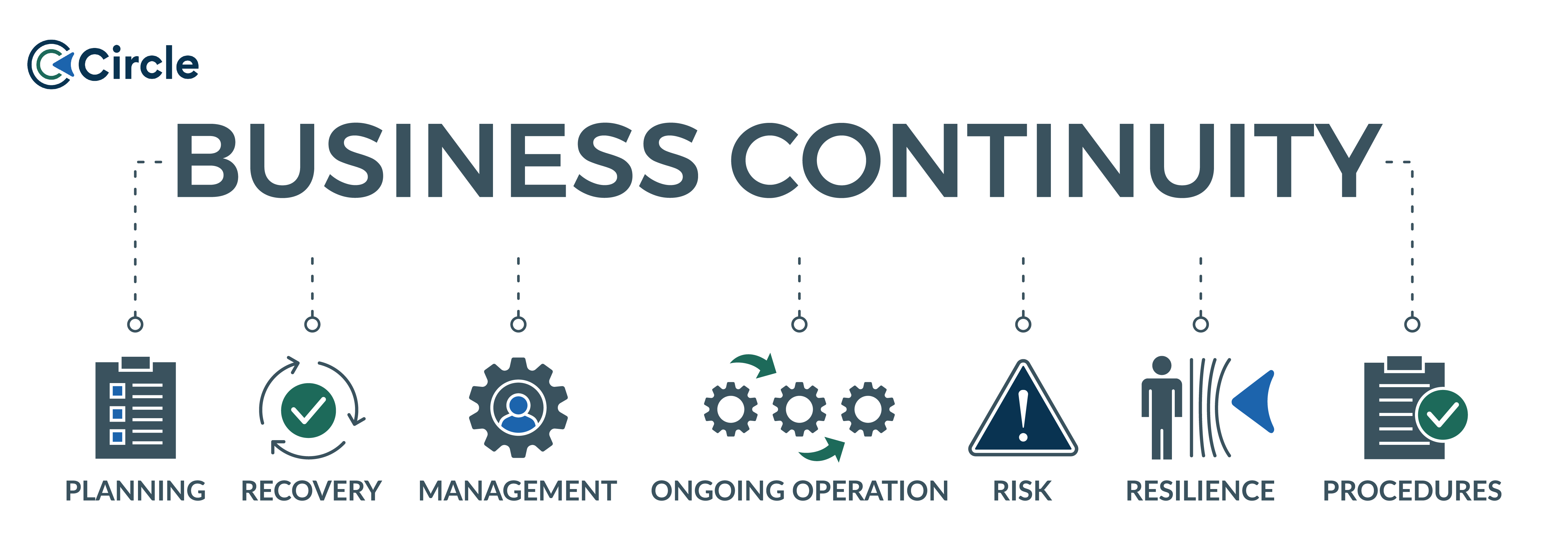
  • Business continuity often focuses on restoring operations after an incident — getting systems back online, restarting services, and working through backlogs so you can return to “business as usual”.

  • Operational resilience focuses on staying within acceptable limits during the incident itself — keeping your most important services running, containing the impact, and then recovering fast with minimal disruption to customers, staff, and critical operations.

The FCA defines operational resilience as the ability to prevent, adapt, respond to, recover and learn from disruption. In practice, that means designing your organisation so that when disruption hits, you can absorb the shock, keep your red‑line services within tolerance, and come back stronger with better insight for next time.

Karl Konicz"Most disruption isn’t caused by one failure — it’s a chain reaction across technology, people, and suppliers. Operational resilience means breaking that chain fast and keeping the business within tolerance." Karl Konicz, COO at Circle UK Group


Why it’s become a priority in the UK now

Regulation forced the discipline (and the discipline is spreading)

The FCA and PRA frameworks popularised practical concepts such as identifying important business services, setting impact tolerances, running severe-but-plausible scenario testing, and mapping dependencies across people, process, technology, sites, and suppliers. Even outside regulated sectors, organisations are adopting these principles because they work — and because boards can grasp them quickly.

Cyber risk is now business interruption risk. The UK Government’s Cyber Security Breaches Survey 2025 reported that 43% of businesses experienced a cyber security breach or attack in the last 12 months. For many organisations, the biggest cost isn’t “data”. It’s downtime.

And your supply chain is part of your attack surface. Resilience fails when a critical third party fails — whether that’s a cloud platform, telecoms provider, security partner, maintenance contractor, installer, monitoring centre, or even keyholding arrangements. The NCSC’s supply chain security guidance is clear: you must understand and manage the risk introduced through suppliers.

The FCA and PRA frameworks popularised practical concepts like:

  • Important business services

  • Impact tolerances

  • Severe-but-plausible scenario testing

  • Mapping dependencies (people, process, tech, sites, suppliers)

Even outside financial services, these ideas are being adopted because they work. And because boards can understand them quickly. 

The operational resilience model that holds up under pressure

If you only remember one framework, make it this: operational resilience is built by focusing on what must keep running, defining the limits of acceptable disruption, and proving—through testing—that you can stay within those limits when things go wrong.

Start by identifying your critical services: the outcomes your customers and operations rely on most. Be ruthless, because when everything is labelled “critical”, priorities blur and response slows. Next, set clear impact tolerances—your red lines—so everyone understands what unacceptable disruption looks like in real terms, whether that’s time offline, service backlog, safety exposure, or financial impact.

From there, map the dependencies that actually keep those services alive. This is where many programmes fail: they focus heavily on IT, but overlook the physical and operational choke points—people coverage, handovers, access, power, communications, keyholding arrangements, and supplier escalation routes. Once you’ve mapped the real-world dependencies, stress-test them using severe-but-plausible scenarios and collect evidence, not just discussion points. The goal is simple: measure whether you stay within tolerance, and if not, identify what must change.

Finally, build response and recovery around decisions and triggers rather than documents. In a live incident, teams need clarity on severity, escalation, who decides what, how communications happen, and what gets restored first. And because so much operational capability sits outside your organisation, treat third-party resilience as a contractual requirement—clear service levels, response expectations, reporting, and exit plans—rather than something you assume will work when pressure hits. 

  Want the full step-by-step framework, checklists, and scenario templates?  

⤵️ Download our Operational Resilience Playbook Here.

What is include:

  • Step-by-step operational resilience framework to identify critical services and set clear impact tolerances.

  • Practical guidance to map dependencies (people, sites, technology, suppliers) and test “severe but plausible” scenarios.

  • Designed for UK multi-site organisations — especially construction, rail/critical infrastructure, and retail.


Operational resilience isn’t only cyber. It’s also physical.

A lot of UK organisations are over-invested in cyber controls and under-invested in physical exposure—especially where operations depend on sites, assets, keys, vehicles, and rapid response.

Ask yourself:

  • If your primary site is compromised, can you still operate?

  • If your team can’t access a location, how quickly do you regain control?

  • If your alarm signalling fails, what’s the fallback?

  • If your out-of-hours line is overwhelmed, who answers and dispatches?

Operational resilience lives at the intersection of security, safety, technology, and people.


Business continuity


How Circle UK Group can help

Operational resilience fails when response is slow, fragmented, or inconsistent.

Circle UK Group helps organisations reduce disruption and recover faster by strengthening the physical and operational layer of resilience—especially for multi-site environments, high-value assets, construction, vacant property, and critical infrastructure.

Where we add resilience quickly

  • 24/7 monitoring and response support to detect incidents early and escalate fast.

  • Alarm and monitoring solutions designed to reduce downtime and improve out-of-hours coverage (including rapid response workflows).

  • Mobile patrols and targeted response to deter, verify, and respond when risks spike.

  • Keyholding and incident attendance to regain control of sites quickly, without relying on internal staff availability.

  • Site risk reviews that identify physical single points of failure (access, lighting, perimeter weak spots, alarm coverage, CCTV blind zones).

  • Vetted security personnel to reduce insider risk and strengthen operational confidence in who has access.

If your operational resilience plan depends on “someone will deal with it”, you’re exposed. If it depends on clear escalation + real response capability, you’re stronger.

Build resilience into your day-to-day operations

If you want to reduce disruption risk across your sites, talk to Circle about a practical resilience review:

  • Identify your highest-impact operational risks

  • Stress-test your out-of-hours response

  • Strengthen monitoring, deterrence, and incident handling

Speak to Circle UK Group to arrange a security and resilience assessment.

Request Free Risk Exposure Audit

Operational resilience by sector: what “good” looks like for your environment

Operational resilience isn’t one-size-fits-all. The disruption scenarios, dependencies, and impact tolerances shift depending on how and where you operate. Here’s how to apply the same resilience principles to four common UK buyer groups.

Construction

Construction resilience is about keeping the programme moving—because delays cost twice: lost time and rework. Disruption often starts with theft of tools, plant, fuel, or materials, which can stop trades and push tasks back. Access issues like trespass, vandalism, police cordons, or site incidents can halt entry, while power or comms outages reduce visibility by knocking out alarms, CCTV, or reporting. Labour gaps and subcontractor no-shows add further strain when timelines are already tight. The priority is to set clear impact tolerances for maximum acceptable site downtime, map the real dependencies (perimeter, alarm/CCTV uptime, keyholding, out-of-hours response), and test realistic scenarios like weekend break-ins or alarm signalling failure.

Rail and critical infrastructure

Here the bar is higher because resilience links directly to public safety and service continuity. Issues commonly begin with trespass or unauthorised access, then escalate through vandalism, cable theft, or asset interference. Monitoring gaps and comms faults create blind spots, and slow verification keeps disruption live for longer. Priorities should include impact tolerances with safety thresholds and time-to-intervention, scenario testing for coordinated incidents and comms/power loss, and strengthening the “last mile” with faster verification, rapid attendance, and clean handover to stakeholders.

Multi-site retail

Retail resilience is about protecting trading hours and staff safety, especially out of hours and during peaks. Disruption often comes from break-ins/ram-raids or repeated targeting, plus alarm activations that aren’t verified fast enough—either wasting resources or creating long response windows. Store opening can be delayed by damage, access issues, or missing keyholders, with lone-worker risks adding pressure. Focus on impact tolerances for opening time, time-to-secure, and customer impact, consistent out-of-hours handling (verified response, keyholding, incident attendance), and using incident data to spot repeat patterns and harden sites before the next attempt.

How Circle helps

Operational resilience fails when response is slow, fragmented, or inconsistent. Circle UK Group helps organisations reduce disruption and recover faster by strengthening the physical and operational layer of resilience—especially for multi-site environments, high-value assets, construction, vacant property, and critical infrastructure.

Construction: reduce downtime, protect assets, keep the programme moving

Construction sites are dynamic, exposed, and frequently targeted out of hours. The impact is rarely “just theft” — it’s downtime, missed milestones, and rework.

Circle can support construction operational resilience through:

  • Monitored alarm solutions and rapid escalation to reduce time-to-response during high-risk periods.

  • Mobile patrols and targeted response to deter, verify, and attend incidents quickly.

  • Keyholding and incident attendance so your team isn’t dragged in overnight or at weekends to secure site access and manage police/insurer processes.

  • Site security reviews to identify physical single points of failure (perimeter weak points, lighting gaps, CCTV blind spots, storage vulnerabilities).

  • Vetted security personnel to strengthen access control and reduce insider risk where multiple subcontractors rotate on and off-site.

  • Circle Academy also provides Health & Safety (H&S) and operational training for on-site staff and teams, helping raise standards, reduce incident risk, and improve compliance.

Outcome: fewer disruption events, shorter incident windows, and faster return to normal working conditions.

Explore Circle Academy’s accredited Courses  ️

Rail and critical infrastructure: strengthen the last mile of response

For critical infrastructure, resilience is tied to safety, service continuity, and public impact. Circle supports the operational layer that makes plans real.

Support includes:

  • Monitored detection and rapid escalation aligned to critical site response requirements.

  • Incident attendance and site securing to reduce exposure time following trespass, vandalism, or interference events.

  • Support for high-risk locations where access and response speed are the difference between minor disruption and major operational impact.

  • Vetted staff and robust procedures to meet higher assurance expectations.

Outcome: reduced risk windows and faster stabilisation after incidents.

Multi-site retail: protect trading hours and staff safety

Retail resilience is about opening on time, keeping staff safe, and reducing repeat targeting.

Circle can help with:

  • Out-of-hours monitoring and verified escalation to speed up decision-making during alarm activations.

  • Keyholding and incident attendance to secure premises quickly and support early reopening.

  • Targeted patrols and deterrence for locations showing repeat patterns of attempted entry.

  • Practical risk recommendations to reduce vulnerability without disrupting customer experience.

Outcome: improved store continuity, reduced disruption costs, and stronger staff confidence.

⤵️ Download the Operational Resilience Playbook 


Frequently Asked Questions

Have Question? We are here to help

What’s the difference between business continuity and operational resilience?

Business continuity often focuses on recovery after disruption. Operational resilience focuses on staying within acceptable service limits during disruption, then recovering and learning.

Do only FCA/PRA-regulated firms need operational resilience?

No. Regulation drove adoption, but the discipline applies to any UK organisation with critical services, sites, customers, or safety/compliance exposure.

What are “impact tolerances” in plain English?

They’re your red lines: how much disruption you can accept before customer harm, safety issues, or unacceptable operational damage occurs.

What should we map as dependencies?

People, processes, technology, physical locations/assets, and third parties. Most failures happen at the “in-between” points (handover, access, comms, supplier escalation).


How often should we test scenarios?

For critical services, quarterly testing is a sensible baseline. Increase frequency when risks spike (major change, supplier migration, threat activity, seasonal peaks).

How does cyber risk link to operational resilience?

Because cyber incidents increasingly cause business interruption. UK survey data shows a significant proportion of businesses experience breaches or attacks. GOV.UK

What is “critical third-party risk”?

It’s the risk that a key supplier (technology, telecoms, monitoring, maintenance, etc.) fails or is compromised, impacting your ability to deliver critical services. NCSC guidance highlights supply chain risk management as a core control area.

What’s the fastest win for operational resilience?

Agree impact tolerances and run a severe-but-plausible test. It exposes the real blockers fast—especially around comms, access, and response capacity.


Cut Construction Costs with Innovative Site Security Solutions

2 min read

Cut Construction Costs with Innovative Site Security Solutions

In the dynamic world of construction, securing your site is crucial. With valuable assets, machinery, and materials at stake, construction site...

Read More
Vacant Property Security: Protecting Empty Buildings

Vacant Property Security: Protecting Empty Buildings

Why Vacant Properties Are at High Risk Vacant and unoccupied properties are among the most vulnerable assets in the UK. Whether a building is empty...

Read More
Stolen Tools and Theft on Construction Sites: How UK Construction Owners Can Protect Their Projects

Stolen Tools and Theft on Construction Sites: How UK Construction Owners Can Protect Their Projects

Construction site theft has become one of the most serious operational challenges facing UK construction owners. From stolen tools and van break-ins...

Read More